- Boat: Rapido 60 Ineffable
- Owner: Steve Bourne
- Route: Las Palmas, Canary Islands → St Lucia, Caribbean
- Distance: 3,222 nautical miles
- Crossing time: 13½ days
- Departure: 1 December 2018
- Arrival: 15 December 2018
- Crew: Steve Bourne and four crew
- Maximum speed: 26 knots
- Design: Morrelli & Melvin
- Purpose: Ocean passage aboard a performance cruising trimaran
In December 2018, Steve Bourne set out from Las Palmas, Gran Canaria, aboard Ineffable, his Rapido 60 trimaran, bound for St Lucia in the Caribbean.
It was no ordinary passage. The 3,222-nautical-mile Atlantic crossing would take 13½ days, with the crew sailing through squalls, light winds and the long swells of the Atlantic while managing a boat capable of speeds well beyond those of most cruising yachts. At one point, Ineffable reached 26 knots in a squall – yet, perhaps Steve’s most revealing observation was what he could do while the boat was moving at speed: stand upright, make coffee and cook without having to brace himself against a 30-degree heel.
For Steve, an experienced sailor whose background was largely in monohulls, the voyage was also an introduction to a very different way of crossing an ocean. After four months sailing Ineffable around the Canary Islands, he had come to appreciate the combination of speed, stability, comfort and short-handed capability that the Rapido 60 offered.
But this wasn’t simply a “fast” passage. Steve’s account reveals the preparation behind it – from rig and sail checks and crew training to provisioning, weather routing and the realities of sailing at night. It also captures the less measurable side of an ocean crossing: the exhaustion of night watches, the extraordinary darkness of the mid-Atlantic, the vastness of the stars, the camaraderie of the crew and the satisfaction of finally making landfall.
Originally published in three parts in January 2019, this is Steve Bourne’s complete account of sailing Ineffable from Las Palmas to St Lucia.
Crossing from a monohull to a trimaran
When you put your life savings into a luxury floating home that is capable of doing 30 knots, preparing for an Atlantic crossing takes on a whole new meaning!
My own experience from childhood had been monohulls, including helming a 70’ racing sled for several years. The inevitable monohull experiment of being wet, cold, tired and stiff from four hours on the helm or sitting on the rail was what I believed was the norm for sailing.
I have now sailed my Rapido 60 trimaran, Ineffable, for four months around the Canary Islands and then across the Atlantic to St Lucia in the Caribbean. In all conditions, the Rapido has more than proven itself to be eminently fast, stable, safe and remarkably easy for two to sail.
“Standing upright making coffee and cooking at 22 knots (on the Rapido 60) without having to brace yourself, while fighting a 30 degree heel, is quite a mind-opening experience as to how sailing should be.”
Steve Bourne, Owner, Ineffable.
And on top of that, one is warm, dry and relaxed!!
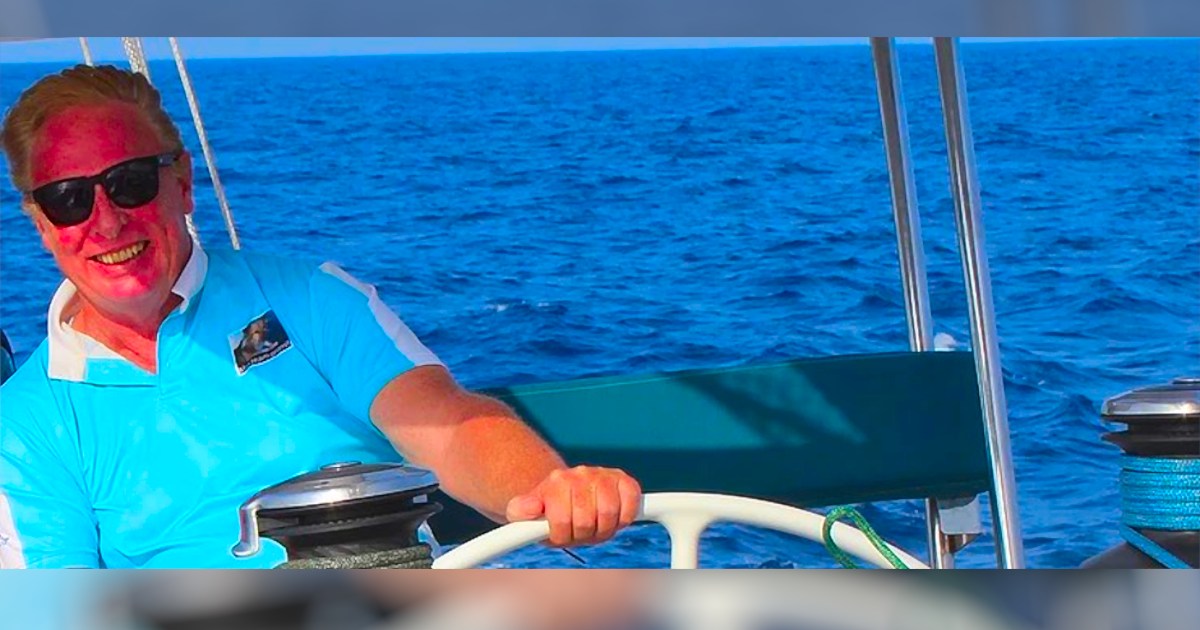
Steve Bourne on the Rapido 60, Ineffable, prior to crossing the Atlantic.
Preparing to cross the Atlantic
Notwithstanding these favourable experiences and coffee cups not sliding off tables, careful preparation for a 3,222 nm crossing of the Atlantic Ocean is critical. Preparation has to cover all aspects of the voyage including the rig, fittings, safety gear and provisioning and, of course, crew training!
Our beautiful new Hall Spars high modulus mast, new North 3Di sails, new Future Fibres standing rigging and all running rigging had to be fine-tuned and checked to be fail-safe. The B&G navigation system needed to be programmed for the rotating mast. A couple of hiccups were discovered and we flew in a rigging expert to sort out the new halyard locks and make some other adjustments. We didn’t want to be mid Atlantic with the reacher or the spinnaker locked up and not being able to drop them!
Training the Team
Critically, crew work had to be “spot on”.
Prior to our departure, we made several return training trips of more than 300 miles from Las Palmas, Gran Canaria to other islands including La Ventura and Tenerife. We practised our reefing and furling, as well as putting up and taking down sails, during the day and at night time. All this was done while wearing safety gear and being attached to the jack stays.
All crew were trained in safety procedures including “man overboard”, launching the rescue pod etc.
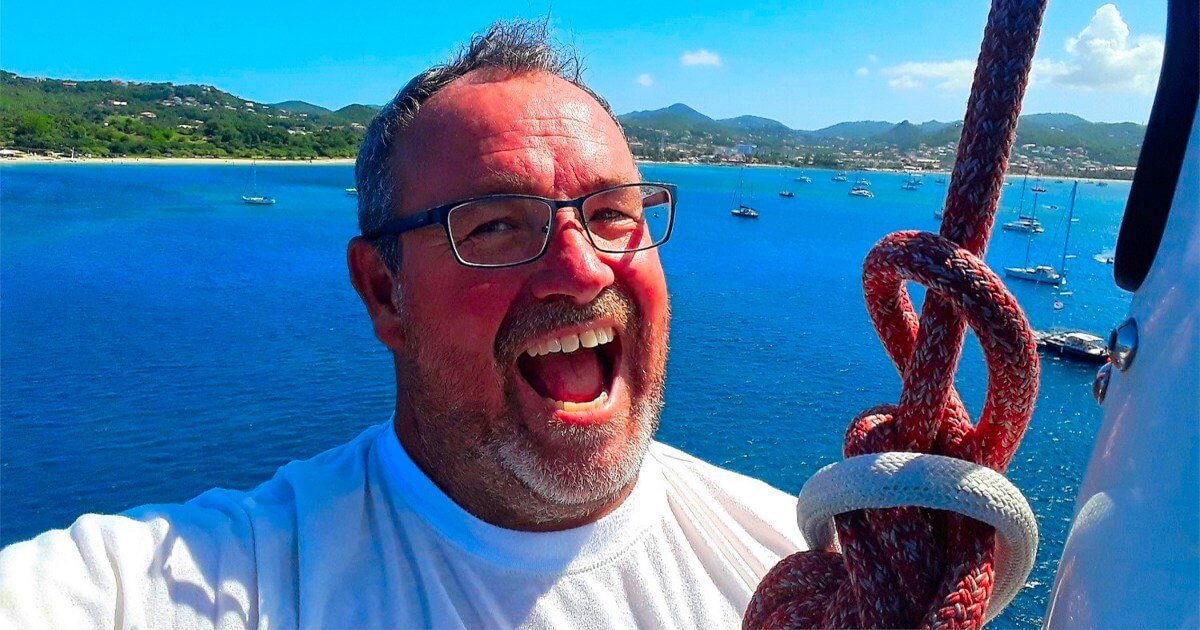
We were so fortunate to have our workaholic Captain, Mark Haswell, on board who had sailed the Rapido many miles before. He was meticulous and disciplined in preparation of both the boat and us. Mark took whatever time was needed to explain details and procedures.
One can think one is a good sailor whipping fellow competitors on an “around the cans” race but it is not until you run a big boat that you realize just how much there is to learn.
As a watch leader, we had young Wedolin Schor, an Austrian who took everything in his stride and became very good at holding both course and speed. He steered us through the largest squall of the trip at over 35 knots wind speed.
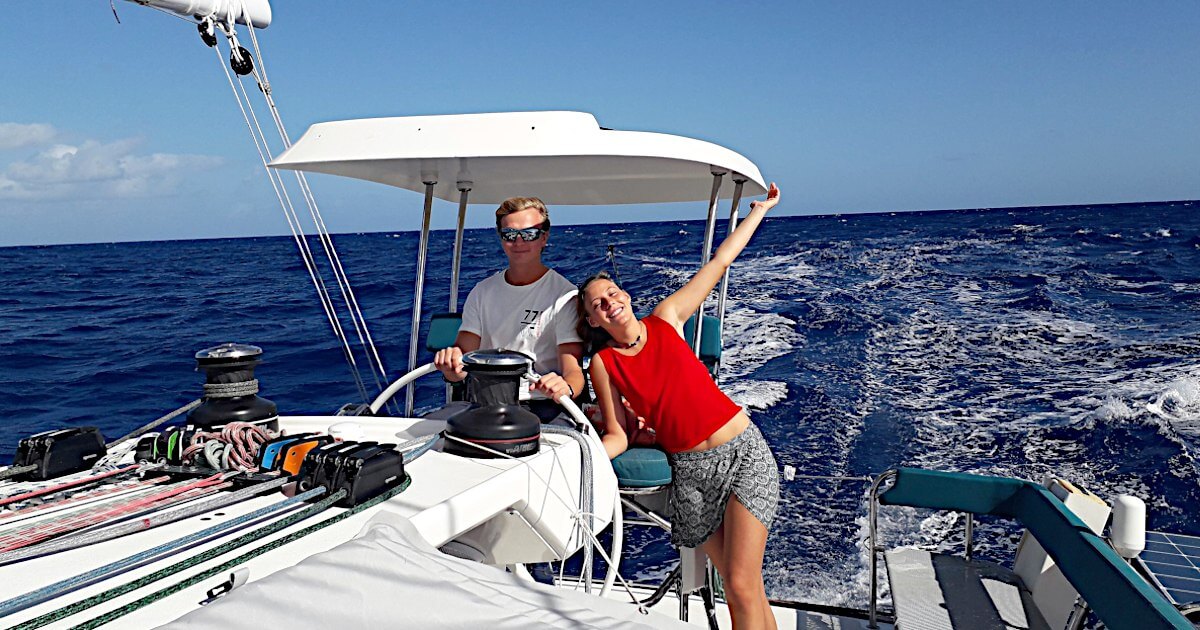
Naturally, we had to have two beautiful French girls on board including my crew on Magic Sailing, from when I lived in Hong Kong.
Elodie Cavernes turned up the morning of our departure without bags! After some pretty anxious calls to the airline which admitted that the bags had been carefully stowed somewhere else on the planet, she did a quick shop for the voyage. Her only hand luggage was a few odds and ends but, thankfully, she had also packed some important spares in it. What a star!
Luna, an adventuresome teenager, only joined us a few days beforehand but even with very limited sailing experience she was competently steering in 20 knots of wind along with Elodie. Few boats can match Rapido’s ease of sailing with such exhilaration. A very forgiving, well-honed, machine!
Provisioning and fuel
Provisioning is quite a task as you need to allow for contingencies. This, I can assure you, makes you think very hard!
There has to be enough fresh water if the water maker becomes inoperable. There has to be enough tinned and dry food to survive if cooking becomes unavailable and until the situation can be safely resolved.
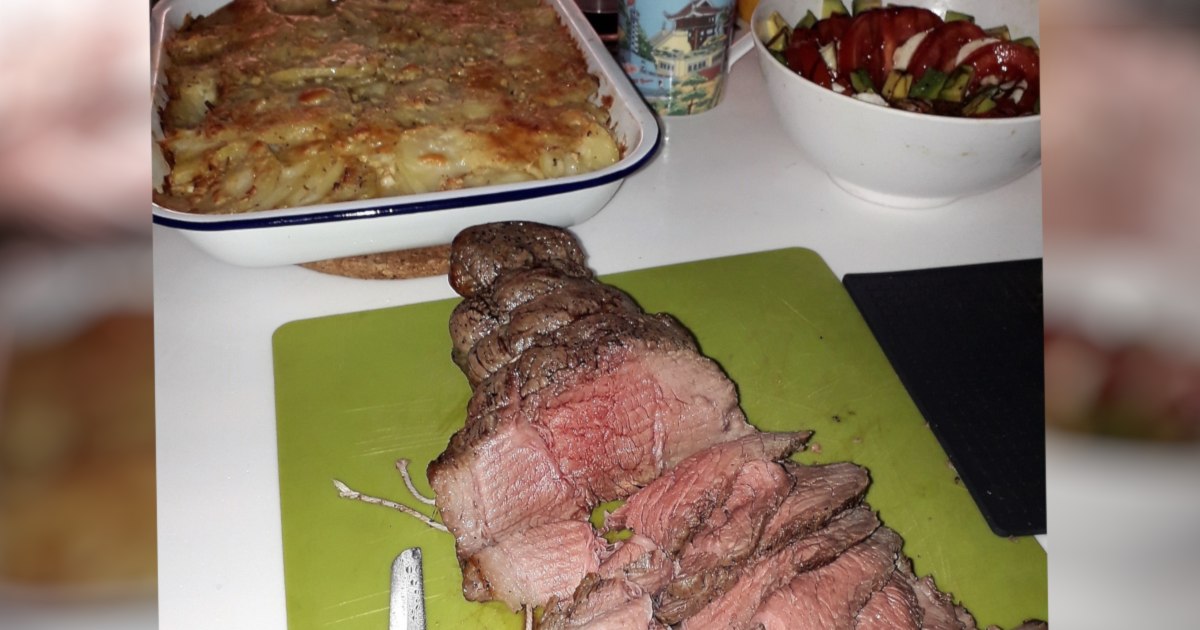
Checking out at the supermarket in Las Palmas was quite a sight. It took us a full two hours!
“The R60 has a combined huge storage / safety survival area under the cockpit which can be accessed from the cockpit or through an external hatch in case of an emergency situation.”
Steve Bourne, Owner, Ineffable.
As such, all of the long term provisions and emergency water were stored there.
The fuel should be enough for about 1,400 miles which is not so bad on a Rapido 60 given its light weight (in race mode, it weighs just 9.6 tons. The floats and beams weigh only 1,000kgs each). The Rapido can easily be driven with a Yanmar 53 HP engine. While many people have described this small engine as “cute”, we could actually do up to 9 knots!
Training alongside ARC racers
Perhaps the most enjoyable part of our training was when one of our sessions coincided with the start of the 2018 Atlantic Rally for Cruisers, the ARC, which races to Saint Lucia in the Caribbean.
Although we missed the start by about ten minutes, we quickly caught the leading catamarans with our big blue spinnaker driving us through the fleet. The cats had gone offshore so we gybed back in and hugged the coast and soon overtook the craftier monohulls who were taking advantage of the stronger off shore breeze near the airport.
We were having a tremendous time (relaxing) doing 13 knots while the rest of the fleet were maxing out at 6 to 10 knots. Rather delightful!
Eventually we had to head back to the marina and beat through the fleet at 13-15 knots, which surprised many participants as they altered course to miss us when they didn’t need to.
To put it mildly, a very pleasing day!
Rapido’s state of the art design by Morrelli & Melvin
The pedigree of Morrelli & Melvin’s design and care really shines through and particularly their experience with America’s Cup cats.
One time, for example, we had an absolutely massive wave near Tenerife which was like being launched off a cliff…
“My home, my home”, I screamed!
Both outer hulls dived into the water and water rushed over the shrouds which are a long way back. However, as we gathered speed, both outer hulls simply popped out of the water!
It was a jaw dropping moment that was also a massive adrenaline rush for sure! With the benefit of hindsight, I absolutely loved it!!
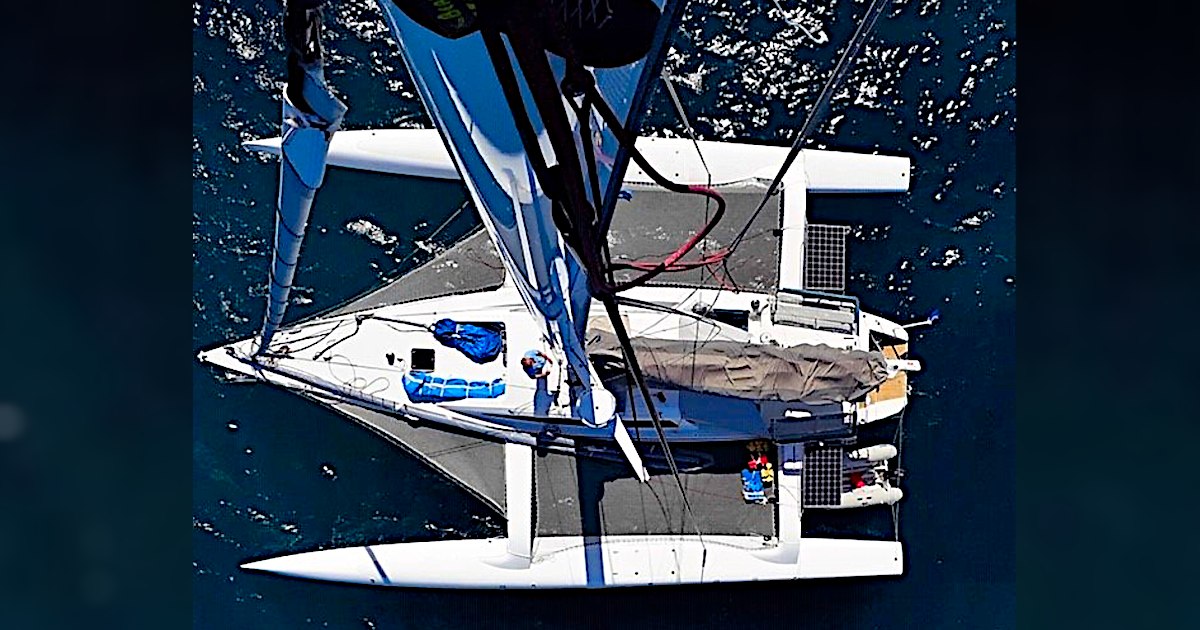
It is in these extreme situations that all the weight (fuel and water tanks, engine, anchor chain etc) centred around the mast really pays off.
The boat is so well balanced, stable and safe that it slots right into the groove. It accelerates with great gusto and then, for a quick surf, you just casually pull it down a wave at something over 15 knots!
“In many respects, it feels almost like a magic carpet. You rarely heel more than 10 degrees. Hard on in a heavier wind, it may get up to 15 degrees. You can quite happily cook a meal at 18 knots plus speed.”
Steve Bourne, Owner, Ineffable.
The boat has watertight bulkheads in both the float hulls and main hull and, with foam sandwich construction, the life raft would only ever need to be used in case of an uncontrollable fire.
The Rapido 60 is well set up for short handed sailing and two can handle her with ease. There are Karver reef hooks on the boom so reefing is simple once you have preset where the main has to be for catchment and release. At the end of our intense training period we could have the boat leave the marina and be sailing in 10 minutes and all sail changes could be made safely either running or close upwind.
It is further testament to the expertise of Morrelli & Melvin, that a relatively small crew can take on a venture like this especially when achieving speeds that put a magnificent satisfying smile on your face while – very importantly – feeling totally secure and not drained.
Farewell to Las Palmas
With Elodie kitted out and looking fab, we checked out from Las Palmas and said our goodbyes to a few dear friends who had made a special journey to see us off.
It was a wee bit sad sailing out of Las Palmas as we had been there for two months and had many laughs with so many people.
It is a fabulous destination with the wildest landscapes and bars!
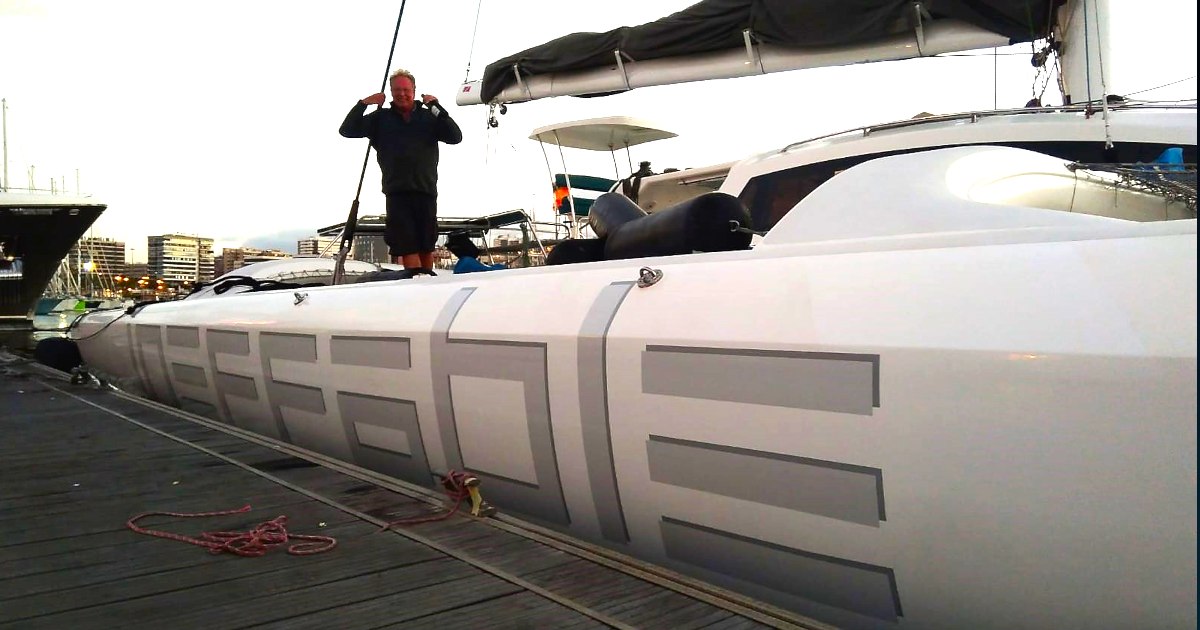
The main ARC fleet had left a week earlier and here we were all “on our tod” (alone) and we wouldn’t see land again and perhaps only one or two boats for at least two weeks.
It is an exciting but daunting prospect, and not quite like taking a VW camper van around Europe.
There is nothing out there. NOTHING!
Las Palmas to St Lucia
In straight lines, the journey from Las Palmas to St Lucia is 2,800 nm but, to get in the trade winds, there is quite a long dogleg south. Another reason to head south is that it’s rather warmer. As the old advice goes, head south west until the butter melts!
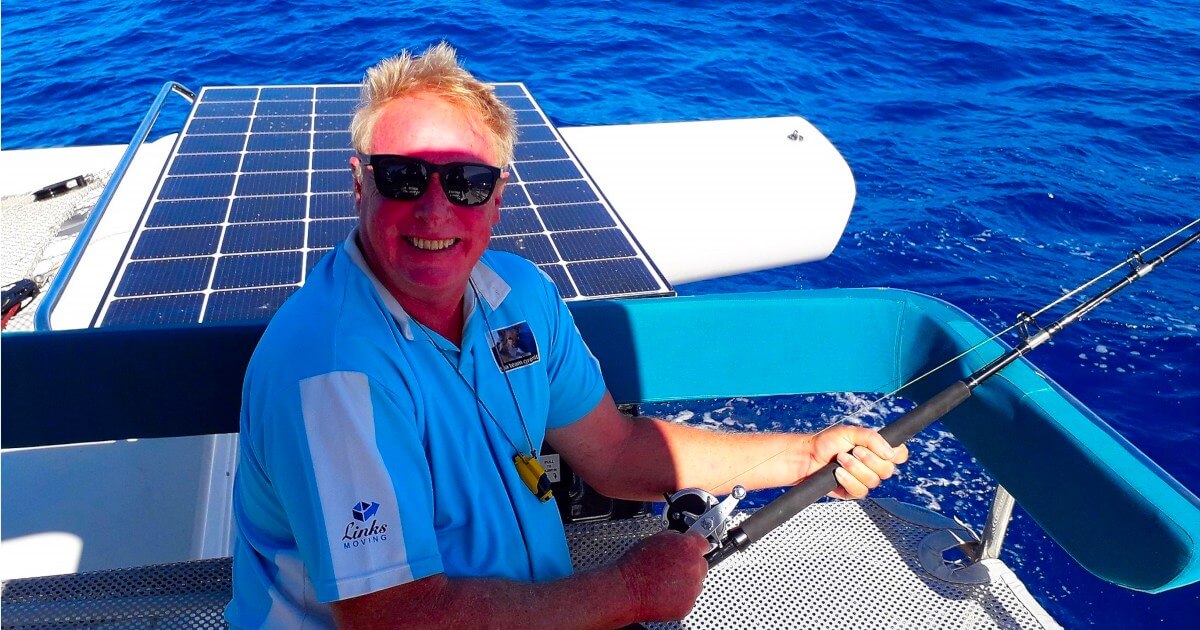
With a full experienced racing crew you could do the crossing in as little as 7-10 days but are you going to do that with your new home and some inexperienced crew?!
Our policy was one of safety and prudence! At night, we sailed with two reefs and a staysail so our speed sometimes dropped to an appallingly boring 6 knots! The one time we did keep the reacher up led to a few hairy moments which, afterwards, was quite amusing. But even with two reefs in the main we hit 26 knots during a squall!
The helm station has a commanding and dry position enabling clear all round vision. One feels completely in control.
Going below deck there is a surreal serenity to the interior. It is quiet with little pitching or yawing and I even managed to sleep in the front cabin the whole way. Having said that, it is better not to be lulled into a completely relaxed state as the boat is fast and you do have to be somewhat careful. As with all boats, when walking about, it may be that ‘tenth’ wave or surfing down a swell which may be a little bigger than expected!
“Having the relatively level platform of a trimaran to cross an ocean really has to be experienced. It is far less tiring than sailing a monohull which heels at 30-35 degrees. It also does not have that odd unnerving pitching-yawing motion of a cat or have the waves slamming under the bridge deck!”
Steve Bourne, Owner, Ineffable.
Life aboard Ineffable
Captain Mark immediately set the watch system and it took a few days to realise that if you don’t nap when off-watch you will be tired while on watch!
We fell into a routine of cooking, cleaning and sailing – and delightfully mundane stuff like reading, playing cards and other games. And, of course, there was the daily exercise routine performed by Elodie and Luna on the nets to rounds of applause, sometimes at 15+ knots!
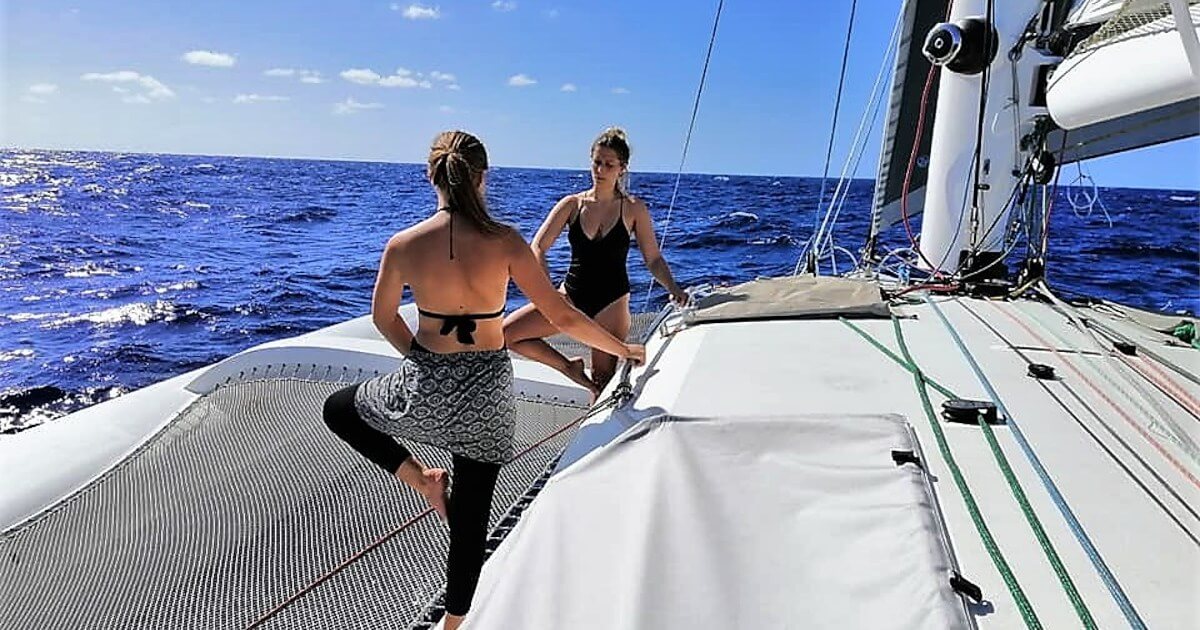
There was even the occasional drink.
But, it must be said, having a fairly dry boat and decent off-watch naps makes a lot of sense as everyone is out of their normal sleep patterns. Being mid Atlantic, decision-making needs to be as sharp as possible at all times.
Night watches can be a bit exhausting as we only had a few nights of moon. It was so pitch black out there that you simply sail by numbers with occasional sail setting.
To maintain what vision we had, bright lights, even for just a few seconds, were a complete “no no”!
“But the stars!! The enormity and beauty of the universe hits you. Surely we are not alone?! Looking up at this vast other ‘world’ one becomes hypnotised… and then, back to reality to check the sails, instruments, AIS and radar!”
Steve Bourne, Owner, Ineffable.
Weather
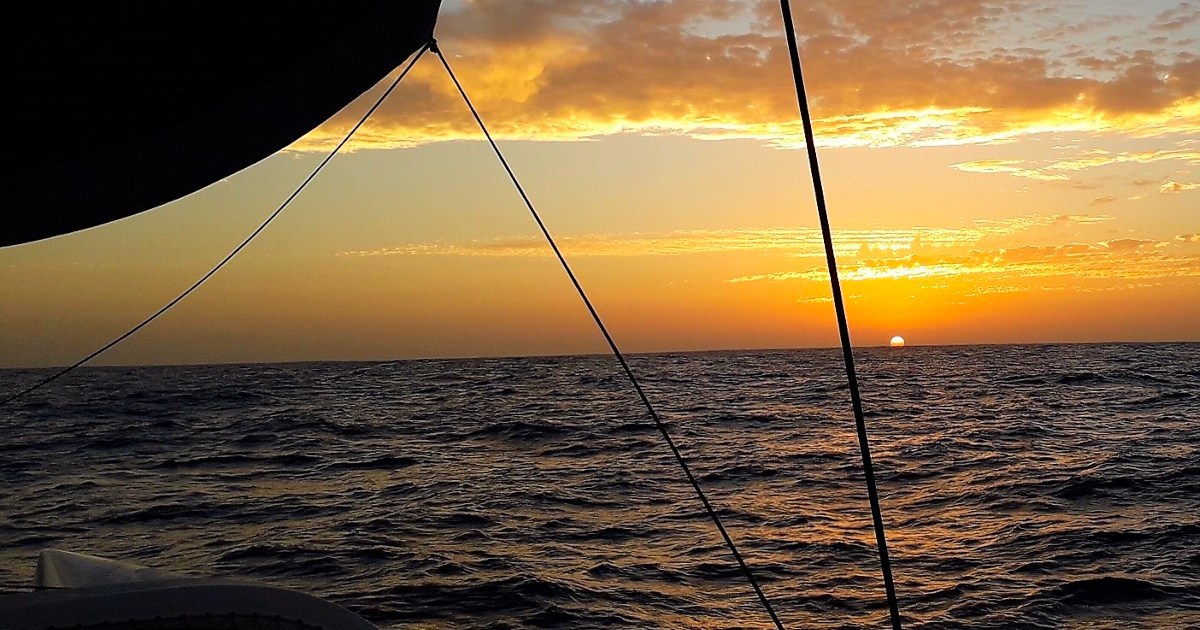
We soon learnt that clouds are often nice and fluffy by day with a little extra breeze under them.
This makes for pleasant high speed sailing but at night, for some odd reason, they can turn into squalls with rain and 35-40 knot gusts. Not so pleasant!!
Looking back on it, with this really sensible night sailing policy, we could have carried a lot more sail at night. It was a great lesson.
Tactically we had huge help from Johannes, who was on shore near Vienna, with daily weather updates and advice on the best routing. The winds became quite light as we went south-west down the African coast so it took some time before we could finally make the big gybe to head for St. Lucia.
Going towards the Cape Verde islands is not all a bad idea. It made us feel like we were nearly ‘there’ even though there was about 2,100 nm to go!
Catching the ARC racers
Steadily we caught up and overtook some of the slower ARC boats which were sailing in a range of 4-10 knots. The monohulls were rolling a lot in the cross swells as typically you have a swell from the trade wind and a separate wave from the current wind.
Meanwhile, trimarans do not roll!!
The speed we overtook them was a tad embarrassing as often we were in the 12-17 knot range but, if the truth be known, there was a bit of smug satisfaction being on a really fast boat!
Rapido – “Queen of the Oceans”
You simply have to sail a Rapido 60 to realise that she is the Queen of the Oceans for a long journey.
You rarely get wet and the boat is such a stable platform that the mundane daily tasks of cooking, cleaning, showering and yes, using the head (have you ever used one rolling and crashing at 35 degrees? Not a nice experience!) are not stressful at all.
I just love and trust this boat so much. It is an honour to own it.
And finally…
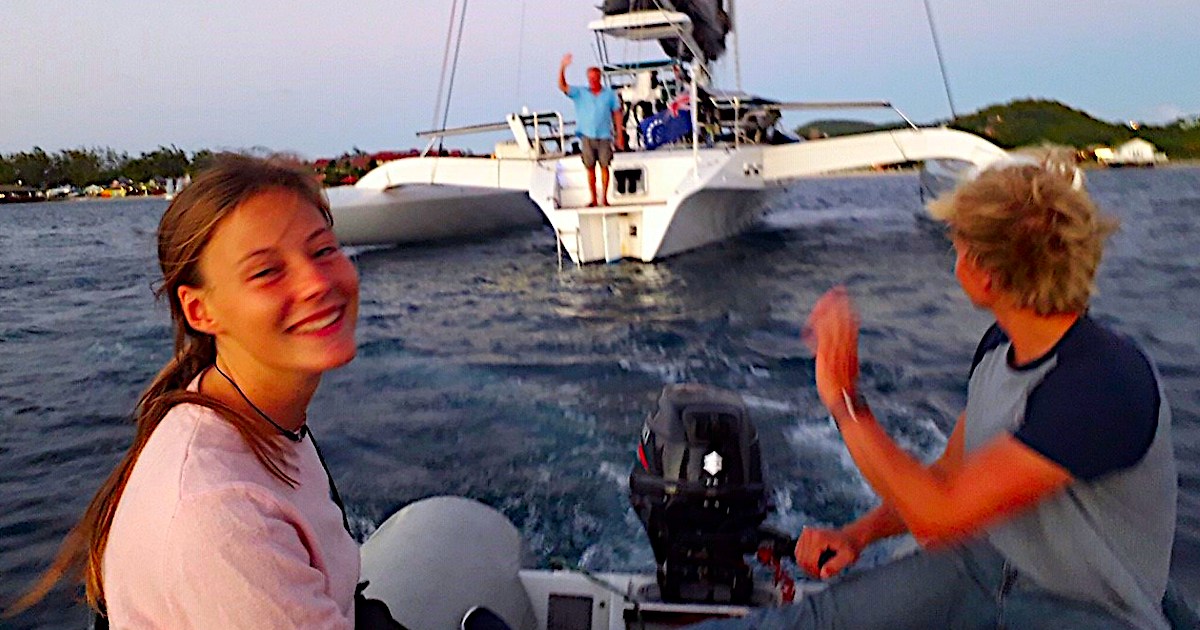
All in all, it was a wonderful experience with an amazing bunch of people. It was so safe and comfortable while offering a speedy fun ride!Elodie and Wedolin farewell Steve Bourne and his ineffable Rapido 60.
“Love it? Hate it? Or just get used to it? Monohull sailing means being together in the cockpit and saloon. A Rapido, by contrast, has amazing space that allows one to be private, social or somewhere in between.”
Steve Bourne, Owner, Ineffable.
The Rapido offers an aft helm deck with settees, separate cockpit, saloon, the forward sun deck, the nets and cabins. This fact can really add to the crew’s psychological well-being as we all need our space from time to time.
We did 3,222 nm in 13 and a half days which is really quick considering the light winds and overly cautious night sailing with two reefs and the stay sail.
The key take away for the voyage was the absolute need for careful preparation.
“When you combine a great, caring crew with an amazing captain, who all muck in together, you have the makings of an ineffable journey.”
Steve Bourne, Owner, Ineffable.
What Makes a Rapido Different?
Steve’s story gives a fascinating first-hand account of what it is like to cross an ocean aboard a Rapido 60.
But the bigger question is why a trimaran can offer such a different combination of performance, stability, comfort and safety.
To discover the thinking, design and engineering behind the experience, click on the Button below.