

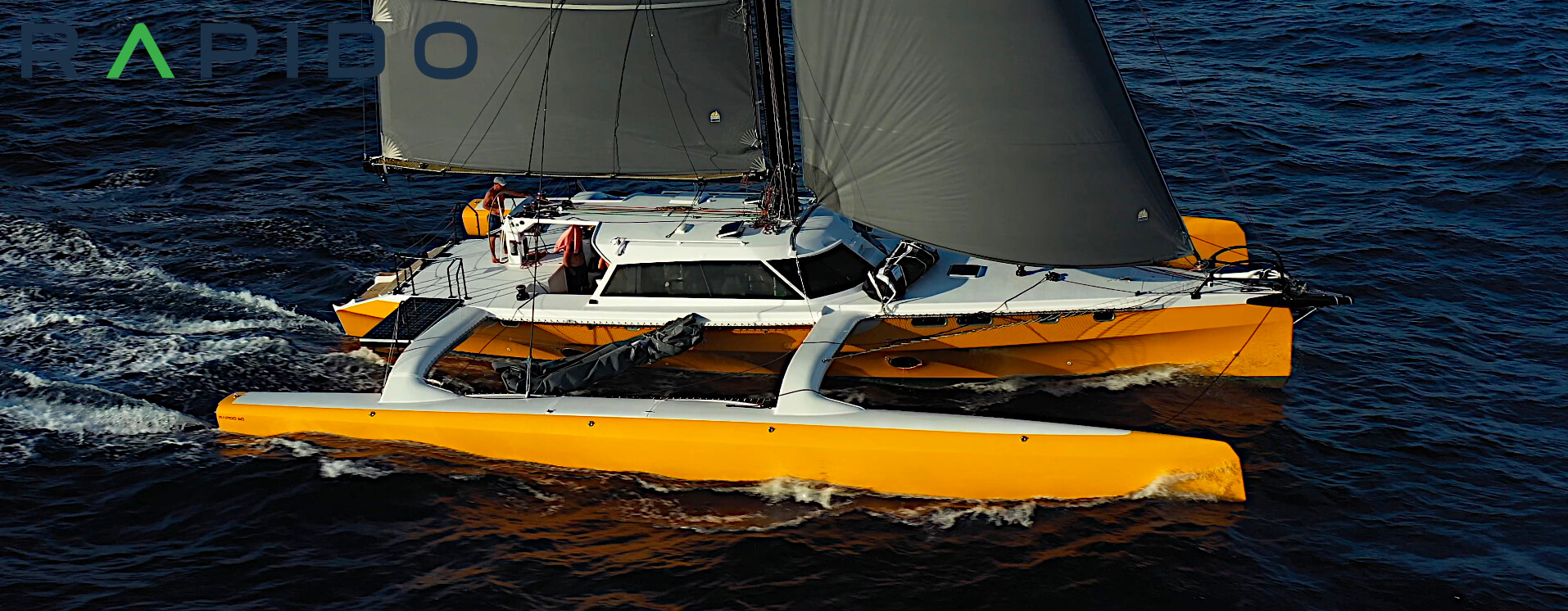
1. The Boats Have Changed Dramatically; The Ocean Hasn’t
The history of sailing is a history of trial and error.
For thousands of years, sailors have ventured onto unforgiving oceans in vessels that never stopped evolving. From timber and canvas to high-modulus carbon and advanced composites, every generation has learned more about how to work with the forces of wind and water.
The boats have changed dramatically. The ocean hasn’t.
“We don’t have the challenges we once did, but the sea hasn’t changed since the days of Magellan. The devices have changed, but the forces of wind and water are still the same."
— Michael Johnson, Sailor and Circumnavigator.
Today, there is no single definition of the perfect boat. A traditional monohull, a cruising catamaran, and a high-performance trimaran each deliver an extraordinary experience. Each represents a distinct, brilliantly engineered solution to the same ancient challenge – and that variety of solutions is something every sailor can celebrate.
2. Why Rapido?

Where you sail – and how you want to use your boat – inevitably influences the boat you choose.
You may be looking for relaxed coastal cruising, long ocean passages, remote destinations, high-latitude sailing, or simply the freedom to go wherever the weather and opportunity take you. Different ambitions place different demands on a boat.
A cruising monohull offers proven ocean-going characteristics, substantial displacement and a long-established approach to offshore sailing. It heels under sail, but that movement is part of the sailing experience for many sailors and can contribute to excellent windward performance.
A production cruising catamaran offers exceptional stability at rest, generous living space and a comfortable platform for life aboard. Its design brings different considerations around weight, windage, bridgedeck clearance and performance, particularly as cruising loads increase.
Both types of sailing vessels have been incredibly successful, taking generations of sailors across oceans and around the world. Both remain excellent choices when their particular strengths align with what you want from your boat.
But what if you didn’t have to choose between them?
That was the thinking behind Rapido. As co-founder, Paul Koch explains:
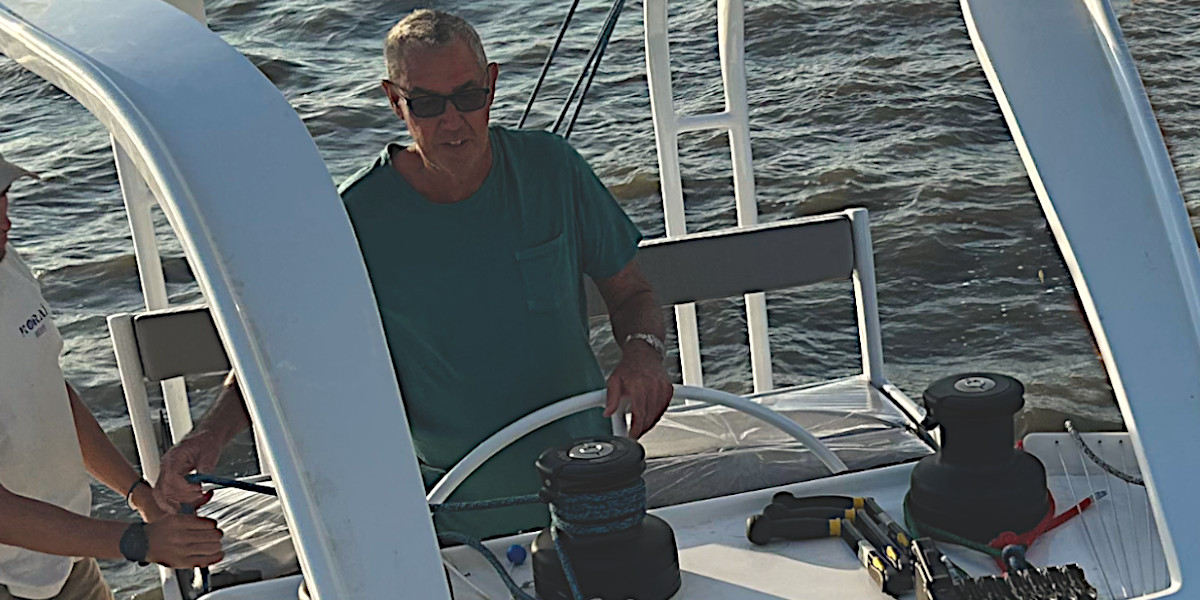
Photo caption: Paul Koch, co-founder of Rapido Trimarans, at the helm of Rapido 53XS, Picomole.
“The whole Rapido trimaran concept came about because we felt the world needed a larger, roomier, cruising trimaran with good living space that delivered great performance.”
— Paul Koch, Co-founder, Rapido Trimarans. Quoted in Boating New Zealand
Morrelli & Melvin and Triac Composites

Rapido approached the world-renowned naval architects, Morrelli & Melvin – with five America’s Cup campaigns behind them – to develop the design and engineering. At the same time, Rapido established its own advanced composite manufacturing facility, Triac Composites, in Vietnam.
Triac Composites represented far more than simply having a place to build the boats. Rapido established the facility to bring critical composite work in-house, giving direct control over construction quality and the technology behind the boats. Masts, initially outsourced, were subsequently brought under Triac’s control, while asymmetric C-foils were developed in-house from the outset.
Today, Triac also builds advanced composite components for Rapido and other companies, with work extending into commercial, industrial and aerospace applications. This broader business reduces reliance on the inherently cyclical pleasure-boat market while exposing Triac to new materials, processes and demanding manufacturing challenges – continually making us better composite builders.
The pieces were now in place. The question was whether Rapido could make the idea work: an ocean-cruising trimaran designed from the outset to harness the forces of wind and water (passage making ability) – delivering structural integrity, efficiency, stability, performance and genuinely usable living space.
Some sailors view ocean passages as the distance between two points on a chart. A Rapido owner sees the passage itself as one of the great privileges of owning a sailboat.
The following sections explain the thinking behind that approach.
3. Advanced Composite Engineering by Design
To understand how this architectural evolution translates to the open ocean, it helps to look beneath the surface. Rapido is not simply a collection of lightweight materials, advanced components and clever ideas. The boat is engineered as a complete system – balancing weight, strength, hydrodynamics and load management so that each element works with the others.
The objective is simple: extract as much performance, efficiency and capability as possible, while maintaining the strength, stability and safety margins required for serious ocean sailing.
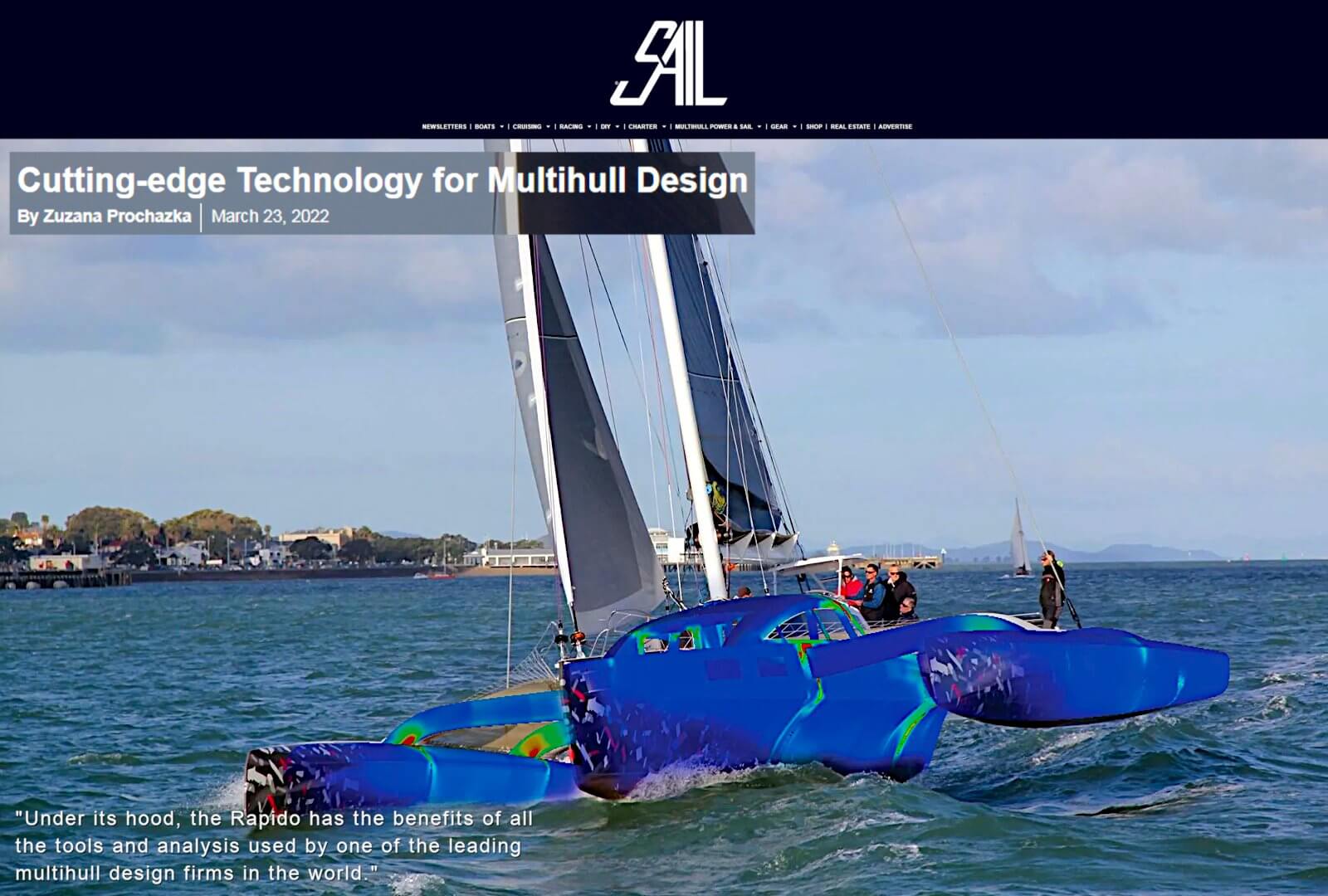
In an in-depth technical assessment, SAIL Magazine interviewed Morrelli & Melvin’s lead designer, Erik Berzins, to uncover the rigorous development lifecycle behind the Rapido fleet. Below is a very abridged version of the full article.
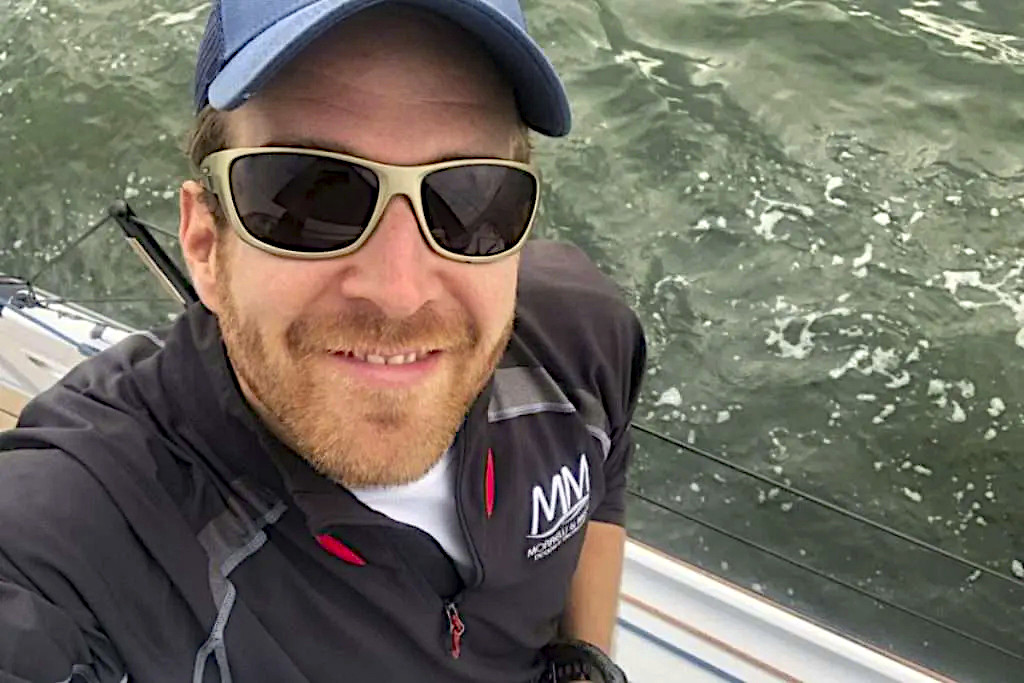
The Three-Phase Development Framework
Part 1: Concept Development
This foundational phase defines the vessel’s initial architectural DNA. The engineering team establishes critical target displacements, weight distribution margins, and hull geometries to balance high-velocity performance with blue-water safety long before physical production begins.
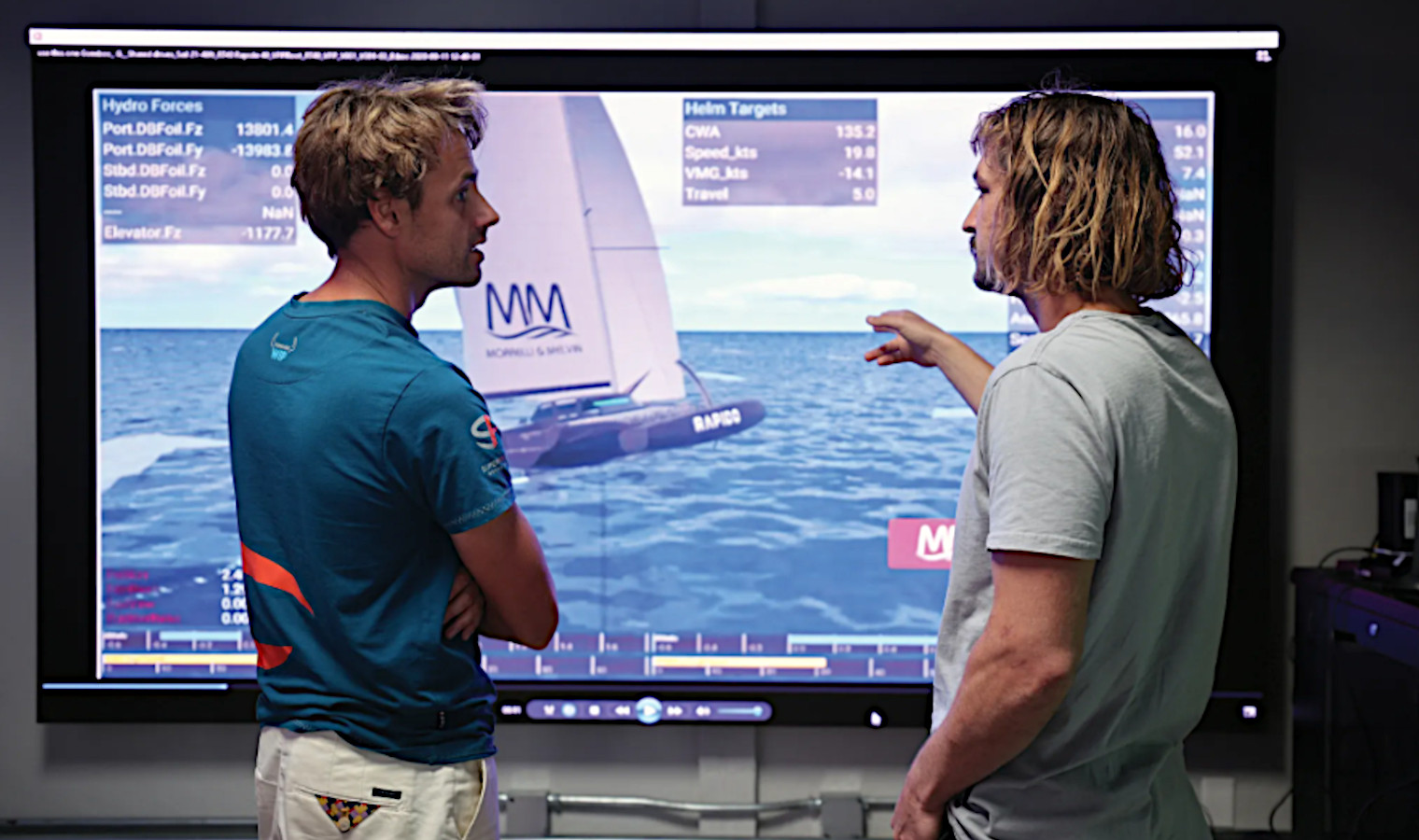
Part 2: Structure and Performance Analysis
To map, simulate, and optimize every physical variable under heavy blue-water loads, the design team leverages a suite of advanced, aerospace-grade software architectures:
- Finite Element Analysis (FEA): Digitally models real-world loads across the hull and deck to maximize structural safety margins without adding unnecessary weight.
“Throwing more laminate at problem areas just creates an overbuilt boat. And a heavy boat is a slow boat. It’s all about balance and adding additional structure only where it is needed. That’s one of the biggest benefits of composites. The ability to add strength in specific load paths allows us to build up the required strength for a fraction of the weight.””
— Erik Berzins, Morrelli & Melvin, quoted by SAIL Magazine.
- Computational Fluid Dynamics (CFD): Minimizes hydrodynamic drag below the waterline to optimize hull efficiency.
- Fluid Structure Interaction (FSI): Analyzes how the shifting sea dynamically impacts the rig and hull structures simultaneously.
- Velocity Prediction Program (VPP): Guarantees stable performance and predictable handling across all true wind angles.
Part 3: Design Validation
The final phase transitions complex digital simulations into physical reality. Advanced prototyping and strict composite engineering tolerances are rigorously tested to ensure that the theoretical data translates into uncompromised real-world handling and reliability.
This is almost casually mentioned on the Morrelli & Melvin website where they write,
In the case of the Rapido 60, the first finished boat’s centre hull was strapped to the concrete floor and two cranes were used to apply over 10 tons of force on each float to twist and load various parts of the platform to see how it matched M&M’s earlier global loading analysis.
“This is typically a huge investment and a risk, but we’d much rather have something break in the yard than out on the ocean.” [Note, the Rapido passed the test!]
— Erik Berzins, Morrelli & Melvin, quoted by SAIL Magazine
Materials & Component Architecture
Every Rapido Trimaran is built using advanced carbon technology, utilizing similar processes and materials trusted in the construction of aircraft, spacecraft, and America’s Cup racing yachts.
- Carbon Foam-Sandwich Hulls: Infused for maximum stiffness and exceptional buoyancy to create a virtually unsinkable core hull matrix.
- Autoclave-Cured Pre-Preg Carbon Components: High tech and highly specialized structural elements – including the spreaderless rotating wing mast, booms, beams, bow sprits, asymmetric C-foils, T-foil rudders, and struts – are designed exclusively for each individual model. To maintain total quality control, these components are fabricated entirely in-house by Triac Composites.
- High-Modulus Synthetic Rigging: Replaces heavy, traditional steel with a high-tech platform that is significantly lighter, stronger, and longer-lasting, drastically reducing weight aloft and lowering the vessel’s center of gravity.
“The result of all this work is a modern marvel offering a combination of cutting-edge bluewater performance and ease-of-use. Under its hood, [the Rapido] has the benefits of all the tools and analysis used by one of the leading multihull design firms in the world.”
— SAIL Magazine. For the original article in full, click here.
4. Safety – Designed for the Ocean
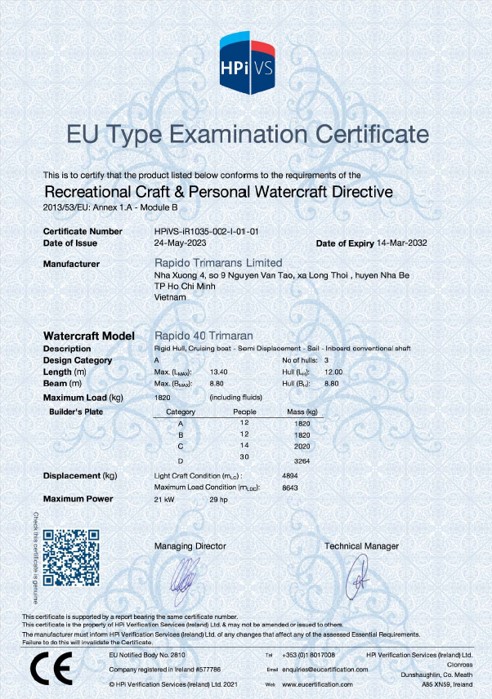
Every Rapido trimaran is designed and certified to CE Category A (Ocean) which is the highest category under the EU Recreational Craft Directive. It is an ocean-going standard for vessels designed to withstand extended voyages where conditions may exceed Force 8 winds and significant wave heights may exceed 4 metres.
Watertight Compartmentalization
- Multiple Watertight Bulkheads: Each hull is divided into separate watertight compartments to contain localized damage and limit the spread of flooding. The Rapido 60’s main hull incorporates five watertight bulkheads, while each ama has four watertight bulkheads.
- No Through-Hull Fittings Below the Waterline: There are no through-hull fittings below the waterline, removing a common potential source of water ingress and flooding.
- Isolated Machinery Compartments: Engine and machinery spaces are separated from the main living areas, helping to contain mechanical failures, leaks or other problems without compromising the primary living spaces.
Emergency Preparedness & Risk Mitigation
- Multi-Layer Escape Access: Dedicated escape hatches provide immediate emergency exit pathways: two hatches on the Rapido 40, and three each on the Rapido 50 & 60, alongside integrated cockpit survival compartments.
- Plumbing Redundancy: Bilge plumbing features high-capacity redundant systems, deployed in both automatic and portable configurations, to maintain rapid clearing capability.
- Fire Hazard Elimination: Electric induction cooktops are fitted as standard, entirely removing the traditional maritime fire and explosion hazards associated with LPG or diesel gas lines.
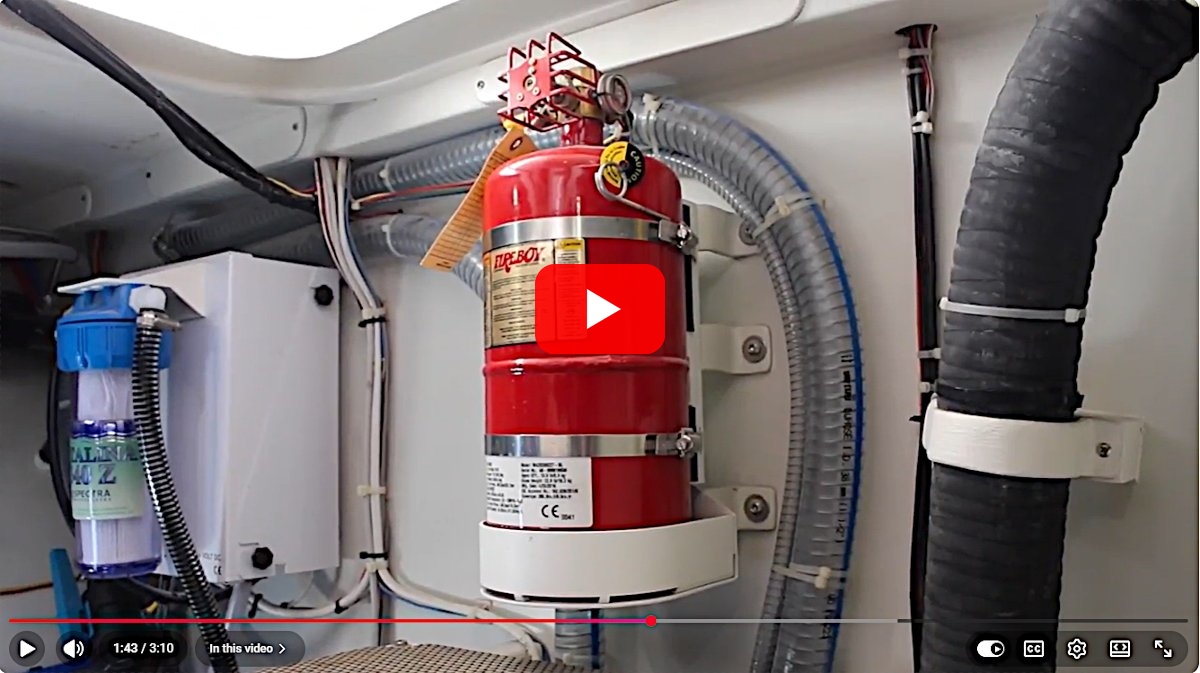
Video above: Exploring the Rapido 60’s spacious engine room and onboard fire suppression system.
- Active Suppression: Engine spaces are protected by automated fire suppression systems (excludes Rapido 40), supplemented by manually accessible fire extinguishers and fire blankets located throughout the vessel.
Performance as a Safety Margin
There is another aspect of safety that is sometimes overlooked: a boat’s ability to make progress can provide the skipper with additional options.
If conditions are deteriorating, being able to cover more miles within a weather window can matter. If shelter lies ahead, getting there sooner can matter. If a passage is only practical during a limited period of favourable weather, average speed can determine whether the passage is viable.
Performance does not make bad weather safe. But a capable boat can give its skipper more choices about when and where to sail.
Short-Handed Capability
Safety is also about how many people it takes to manage the boat. A Rapido is designed to be sailed short-handed, giving a couple or small crew the control and capability to handle ocean passages without relying on a full racing crew.
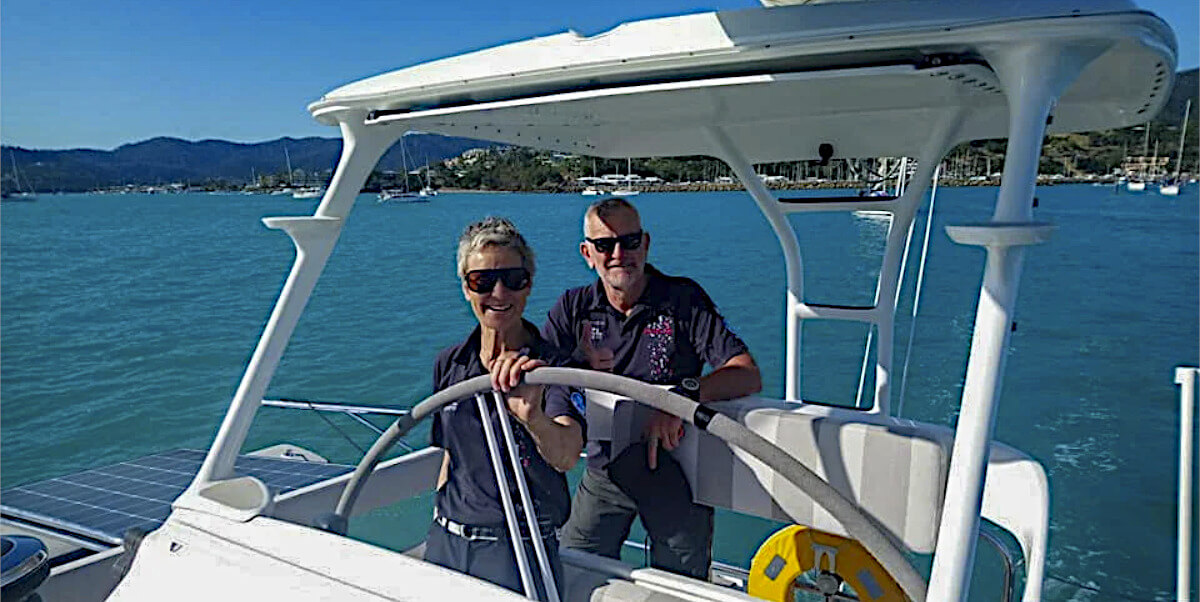
Photo Caption: Jaz and Dougall Love aboard their Rapido 60, Hull #02, Romanza.
Jaz & Dougall Love went on a seven-week, doublehanded Christmas cruise around New Zealand’s North Island, on their Rapido 60, Romanza. En route, they encountered a storm with gusts reaching 62 knots. Afterwards, Jaz commented,
“I feel our safety and comfort level has taken a stride since that experience. Nothing failed – and that included our confidence.”
— Jaz Knowles, Co-owner, Rapido 60 #02, quoted by North Sails.
For YouTube celebrities, Sailing La Vagabonde, they took it one step further for Rapido 60 #04:
“One thing that was really important for us with the trimaran was that Riley will have the ability to sail it single-handed because we will have two kids on the boat.” — Elayna Carausu
“I’m not going on a boat that I cannot single hand.” — Riley Whitelum
— Riley & Elayna, on announcing their decision to purchase a Rapido 60.
5. Passage Performance: The Sailor’s Game of Chess
The most obvious thing about a performance cruising trimaran is that it can sail fast. But raw top speed is rarely the most important measure of an ocean passage-maker.
Sailing has never been a passive pursuit. Wind, current, sea state, coastline, sail selection and trim are constantly changing, and every passage is a series of decisions. Can you find a better angle? Pick up a favourable current? Carry another sail for another hour? Find another half-knot?
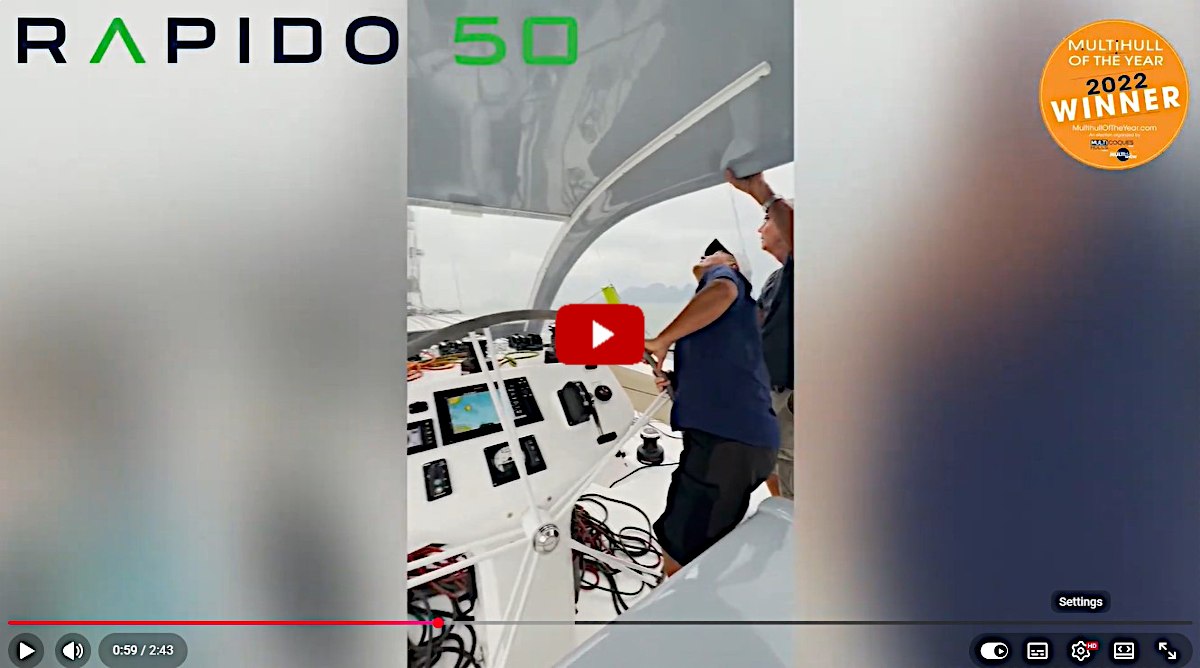
For many sailors, this is the fun of it. Not simply being carried somewhere, but being part of the process.
It is a game of chess with Mother Nature. Sometimes she is playing with you, giving you wind, current and conditions that seem almost too good to be true. Other times, she changes the board. And sometimes, she doesn’t reveal her move at all. You have to read the board, anticipate what is coming and decide how you will respond.
Because that is the thing about sailing: you can’t control the game. You can only play it.
And this is where a Rapido gives the sailor more to work with.
A lightweight, efficient platform can keep sailing when a heavier boat may already be motoring. Higher average speeds can make a weather window usable rather than merely interesting. The boat can turn a good decision into another knot, another mile, another opportunity.
More to Work With
That capability starts with the architecture.
- Lightweight carbon construction keeps displacement low, allowing the boat to accelerate readily and continue sailing in lighter conditions.
- The rotating, spreaderless carbon wing mast reduces weight and drag aloft while increasing the rig’s aerodynamic efficiency. The rotating wing section aligns with the airflow, while the absence of spreaders makes tacks and gybes cleaner.
- Asymmetric C-foils and T-foil rudders generate dynamic lift, reducing wetted surface area and helping control pitch as conditions build.
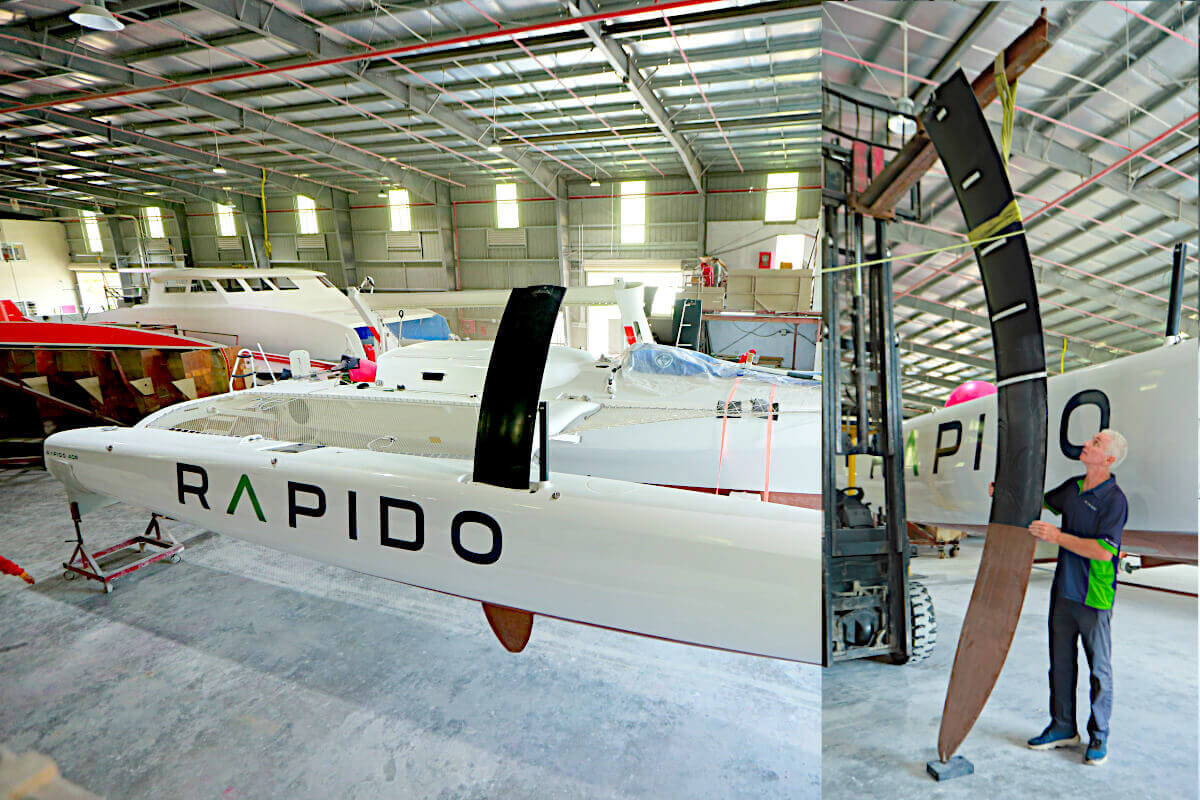
- Different foil configurations allow the boat to be tailored to different priorities, including daggerboards for sailors seeking maximum upwind performance.
- Direct steering gives the sailor immediate feedback from the rudders, while the elevated helm provides excellent visibility of the sails, sea state and surroundings.
- A protected, ergonomic helm keeps the person sailing comfortable and alert through long passages.
These are simply options and tools at the disposal of the sailor. The better the boat, the more moves the sailor has available – and the better their chances of making the right one when Mother Nature makes hers.
A Different Kind of Peformance
Performance isn’t just about getting there sooner. It’s also about how you feel when you get there.
One of the most consistent observations from Rapido owners is the comfort and predictability of the boat’s motion offshore. Jaz Love experienced the difference first-hand aboard Rapido 60 Hull #02, Romanza, during their Tasman crossings. She found the motion significantly easier on the body than the “corkscrewish" movements she had experienced on cruising catamarans that had left her feeling “a bit green". Rather than constantly bracing herself or moving around at awkward angles as might happen on a monohull, she could simply live aboard while underway.
Over the course of a long passage, that matters. Comfort becomes a performance advantage.
It gives you options: sail further, move faster, make better use of changing conditions, take advantage of a narrow weather window or keep sailing when others decide to turn on the engines.
And you don’t need a large crew to use that performance. A couple can sail, trim and control a Rapido themselves. The speed is there when you want it – but it doesn’t demand that you constantly push.
The boat doesn’t do the sailing for you. It gives you more sailing to enjoy.
And when you want to step back, set the autopilot, put the kettle on and watch the ocean roll by—whether you’re on deck or enjoying the 360-degree panoramic views from inside.
Subject to Mother Nature, of course, you choose when to engage – and when to simply enjoy the ride.
Regattas: The Game Can Get More Interesting
Sometimes, the game of chess gets more interesting.
Rapido owners regularly race their boats in regattas, where the same skills that make a passage rewarding become part of a much bigger game. Wind shifts, current, sea state, sail choice, trim and boat handling all matter – but now there are other boats making their own decisions, looking for the same advantage you are.
Video above. Rapido 40 #012, Spike,
at the BVI Spring Regatta & Racing Festival.
A favourable current isn’t your opponent. Neither is a wind shift. They are opportunities, and the challenge is seeing them, understanding them and making the most of them before the boats around you do.
The result can be incredibly engaging: racing against the fleet while constantly playing the conditions. Find the better line. Make the right tactical call. Get the sails perfectly trimmed. Carry speed through the next shift. Find that extra half-knot.
Importantly, you don’t need a professional racing crew to enjoy it. A Rapido gives owners the ability to race competitively with friends and family, while still being a boat that can be sailed short-handed when the regatta is over.
6. Space: Without Giving Up the Cruising Brief
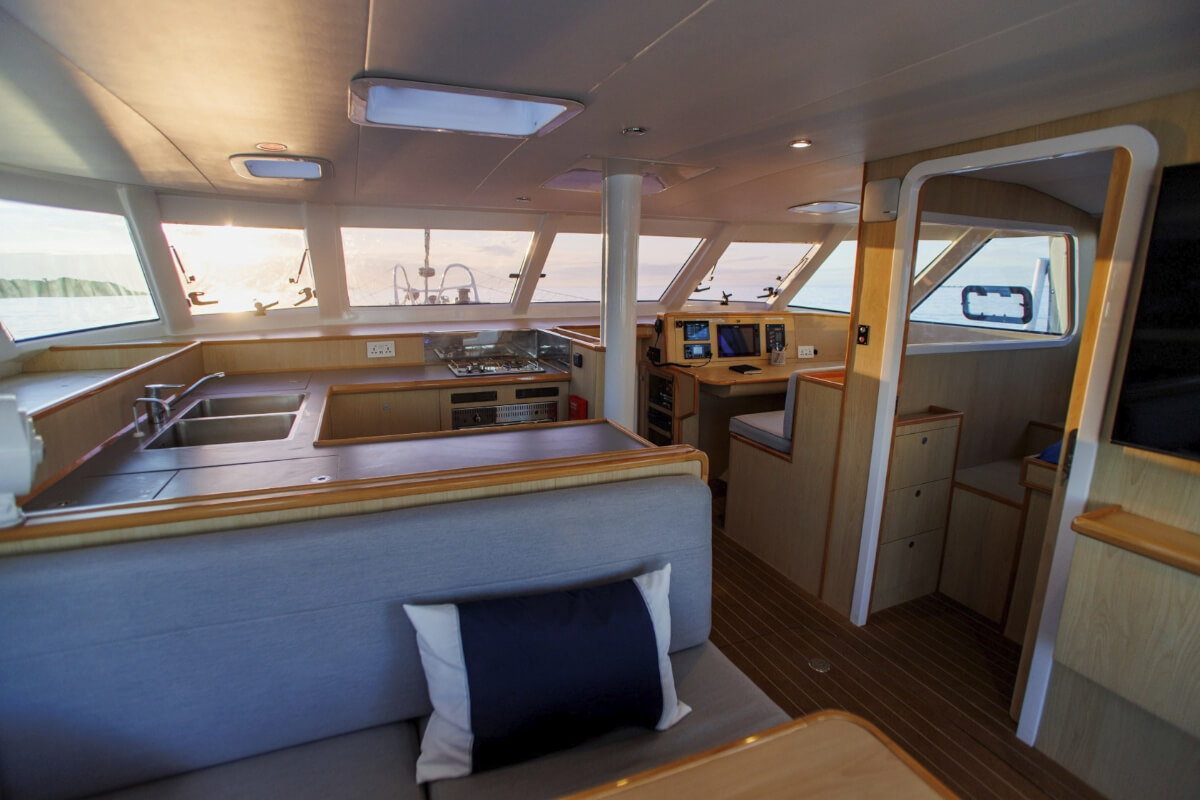
Interior of Rapido 53XS #01, Picomole.
Each Rapido is bigger inside than it looks. One of the most common reactions from first-time visitors: “I didn’t expect this much space.”
One of the first surprises for people stepping aboard a Rapido is the amount of space. From photographs, a trimaran can look relatively narrow compared with a cruising catamaran. In reality, the combination of three hulls, a wide platform and carefully considered interior architecture creates a remarkably generous living environment.
That surprise has been experienced by sailors who already know what they want from a cruising boat. When Riley Whitelum of Sailing La Vagabonde first stepped aboard a Rapido 60, space was the one thing he was unsure about. He knew the conventional wisdom: a trimaran offers less interior volume than a similarly sized catamaran. What he found when he stepped aboard was quite different:
“While we know that it sails unbelievably well… the main thing about trimarans is that there’s less room on board than a similar sized catamaran… and so, when I jumped on board, the only thing I was worried about was the amount of space. I jumped on board, ran around and went, ‘Ohhhhhhhh, this is PERFECTLY fine!’… The forward cabin is massive, with a huge bed. When you’re standing in the saloon, you’re actually standing in a huge room.”
— Riley Whitelum, Sailing La Vagabonde, upon boarding the Rapido 60
Space is engineered, not simply added
Rapido’s approach is not to maximise volume indiscriminately. Every part of the boat has to work within the fundamental requirements of a high-performance trimaran, where unnecessary weight eventually costs performance.
The saloon and cockpit are arranged on a common, elevated living level, creating a spacious indoor-outdoor environment with excellent sightlines (360 degree views, no less) and a strong connection to the sea. The result is an unusually open living area without relying on the massive hull volume of a conventional cruising catamaran.
The same thinking extends into the accommodation. Space is allocated where it matters most to the cruising experience – generous cabins, practical working areas and comfortable communal spaces – while the boat’s structure and systems remain carefully weight-managed.
Storage for real cruising
Space also means somewhere to put everything that comes with extended cruising.
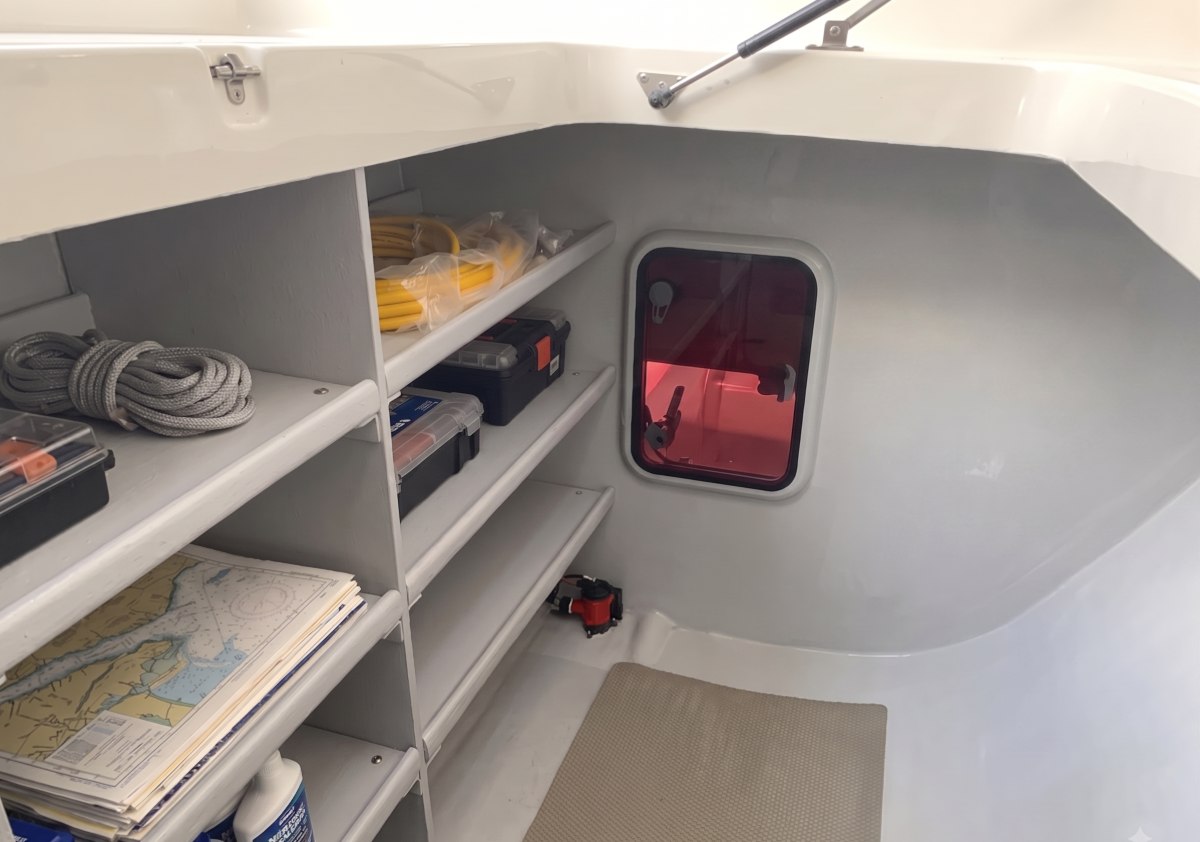
Photo above: Expansive under-cockpit storage on the Rapido 50.
Rapido uses the internal volume of both the main hull and the amas for substantial dedicated storage, allowing provisions, sails, fenders, water toys, spare parts and other equipment to be carried without simply filling the living areas.
On the Rapido 60, for example, the watertight central section of each float (ama) provides approximately four metres of dry storage, while additional large storage is built beneath the cockpit. As owner Stephen Bourne explains:
“The watertight centre portion is for dry storage (4m in length!). This is ideal for storing sails (mould-free!), fenders and, simply, all of the stuff that you don’t use on a daily basis. There is also another, enormous, walk-down storage area under the cockpit for provisions or whatever!”
— Stephen Bourne, Rapido 60 #01
The floats therefore aren’t simply there to provide buoyancy and stability. Properly engineered, they also become useful storage places (within reason… there are no open-ended promises on the water) of the cruising platform.
Living space without losing sight of weight
The final part of the equation is weight.
A fast cruising trimaran cannot simply be made larger, heavier and more elaborate without consequences. Rapido therefore applies lightweight composite construction throughout the boat, including the interior itself. Custom carbon-composite furniture, countertops and other components are engineered to provide the required strength and durability without adding unnecessary weight. These components are manufactured by Rapido’s own Triac Composites facility in Vietnam.
Even the large open trampolines contribute more than recreational space. Constructed from high-modulus Dyneema, they provide useful working and recreation areas while forming an integral part of the structural platform.
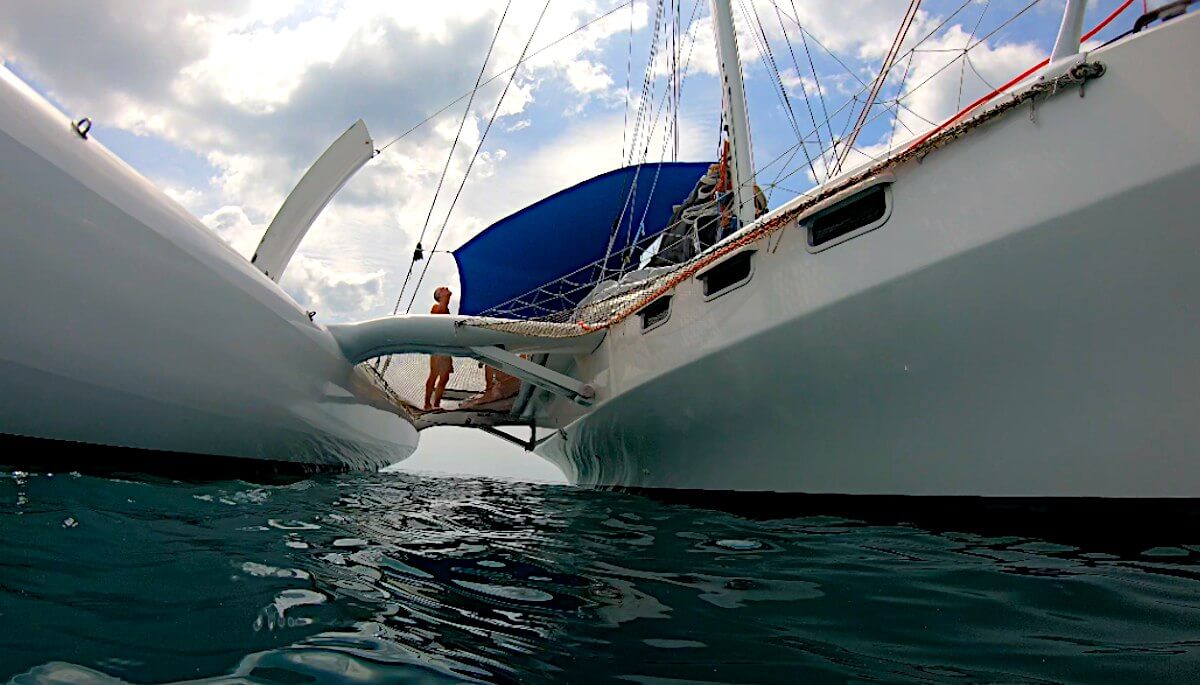
The trampolines add space and strength (Rapido 40).
The result is not simply a trimaran with “enough” space. It is a cruising boat in which space, storage, structural strength and weight have been engineered together.
7. Stability & The Motion Matrix
A Rapido cannot make the ocean flat. No boat can.
Wind, waves and currents will always determine what life aboard feels like. But a trimaran’s wide beam and distributed buoyancy create a naturally stable platform, reducing heel and helping make life aboard more comfortable when conditions allow.
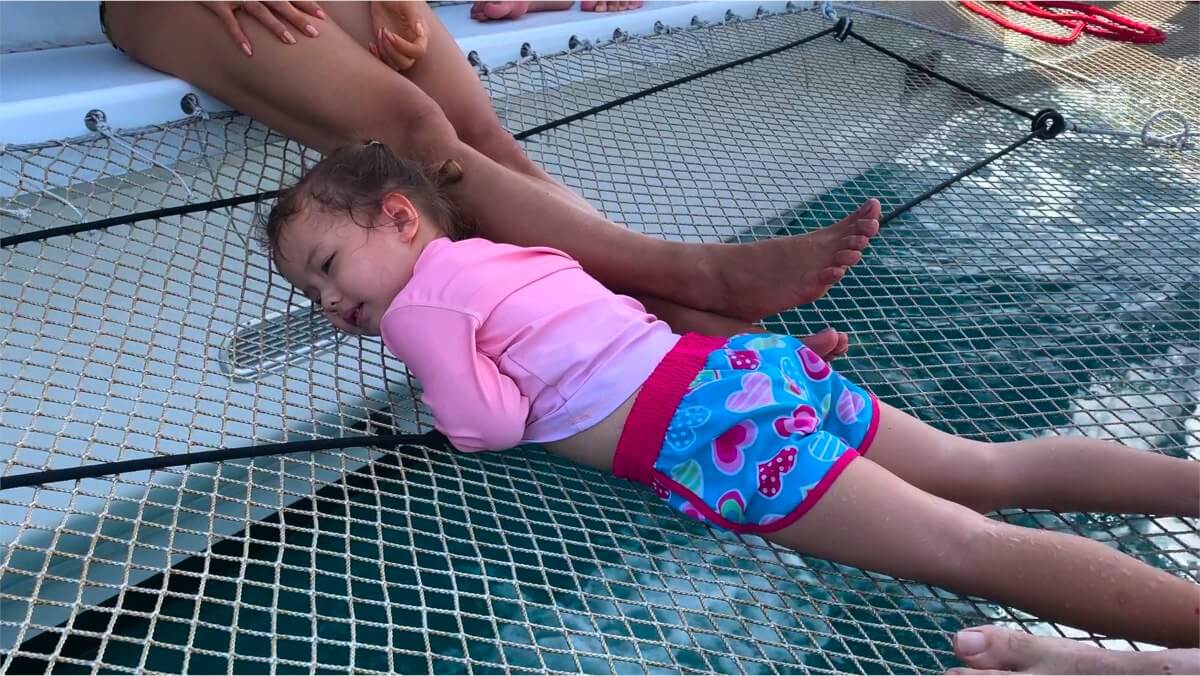
The result isn’t a magic carpet ride. Whether we get to make a cup of coffee remains, as always, at the pleasure of Mother Nature. What Rapido does, however, is give you a platform that can make those everyday moments more possible, more often. in conditions where they might otherwise become considerably more difficult.
Stability Where It Matters
- Wide, Efficient Stability: Unlike a monohull, which relies heavily on ballast low in the hull to resist heeling, a Rapido generates much of its stability through beam and the buoyancy of its floats (amas). This provides substantial righting moment without carrying the weight of a deep ballast keel.
- Less Heel, More Usable Space: A Rapido generally sails with considerably less heel than a conventional monohull. That makes moving around, cooking, dining and living aboard more natural over long passages.
- Controlled Motion: The slender central hull and widely separated floats give a Rapido a different motion profile from a wide cruising catamaran. Hull shape, geometry and foil configuration work together to help manage pitch and unnecessary movement.
Of course, a steep head sea can still slow a Rapido down, and strong wind and breaking waves can make any boat uncomfortable. The difference is having a platform designed to give the sailor more options for dealing with those conditions.
Real-World Proof: Omelettes at 13 Knots
Sometimes the best evidence is not a specification sheet.

During the first leg of the ARC Europe ocean transit from St. Maarten to Bermuda, skipper Aldo Fumagalli and the crew aboard the Rapido 53XS Picomole were able to prepare fresh omelettes in the galley while sailing at around 13 knots, on their way to winning the leg.
That’s not a promise that every Rapido passage will involve breakfast at 13 knots.
It’s a glimpse of what the platform can make possible when the boat, the conditions and the crew come together.
A Rapido doesn’t make the ocean predictable. It gives you a better platform from which to respond to it – and more opportunities to enjoy life aboard while you do.
8. Sustainability: Start with the Wind
Sustainability in yachting is often discussed in terms of solar panels, batteries, electric propulsion and alternative fuels. These technologies all have an important role to play. But a sailing boat has always had another energy source available: the wind.
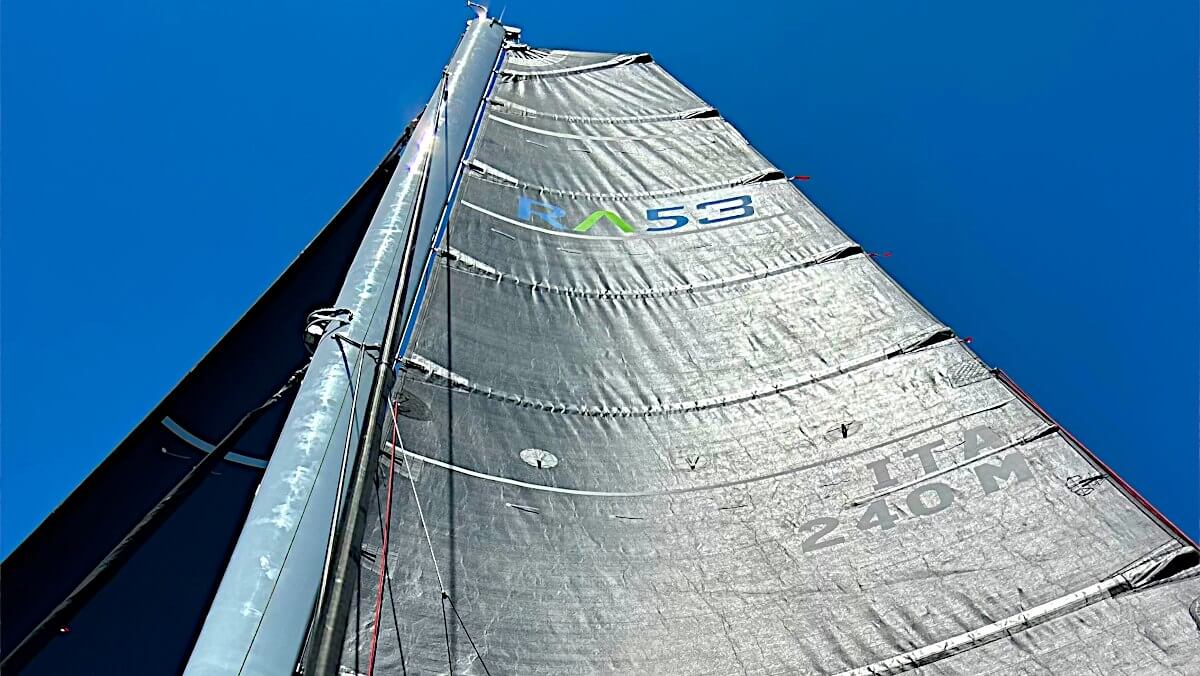
Rapido was designed around a simple principle: the most sustainable energy is often the energy you don’t need to generate in the first place.
Rather than designing a heavy cruising boat and then adding technology to reduce its energy consumption, Rapido starts with the boat itself: keep it light, reduce resistance and make the most of the wind.
A lightweight, slender hull requires less energy to move through the water. Combined with an efficient sail plan and wing mast, this allows Rapido to maintain useful sailing speeds in relatively light conditions when heavier cruising boats may be more inclined to start the engine.
Wind first. Engine second.
Because the boat is designed to move efficiently under sail, there is less need to depend on engine power for propulsion. That also means the auxiliary system does not need to be oversized: less weight helps preserve sailing efficiency, creating a simple cycle of less weight, less resistance, more sailing and less motoring.
The same philosophy applies to energy generation.
Solar power can provide much of the electricity required for everyday life aboard – refrigeration, navigation, communications, lighting and other domestic loads. And when the boat is moving quickly under sail, hydro-generation can use that forward motion to produce additional electrical power.
Use the wind to move the boat. Use solar to power life aboard. Use the boat’s speed to generate electricity. Use the engine when you actually need it.
This is not about eliminating technology. It is about making technology work alongside a fundamentally efficient sailing platform.
And that is why, for Rapido, sustainability begins not with the batteries or the solar panels, but with the hulls and the wind.
Built to Last
Sustainability also means building a boat that can remain useful for decades.
Rapido’s advanced composite construction is designed to deliver high structural strength without unnecessary weight, while avoiding many of the corrosion issues associated with metallic structures. The objective is not simply to make a lighter boat, but a strong, durable and weight-efficient boat capable of a long service life.
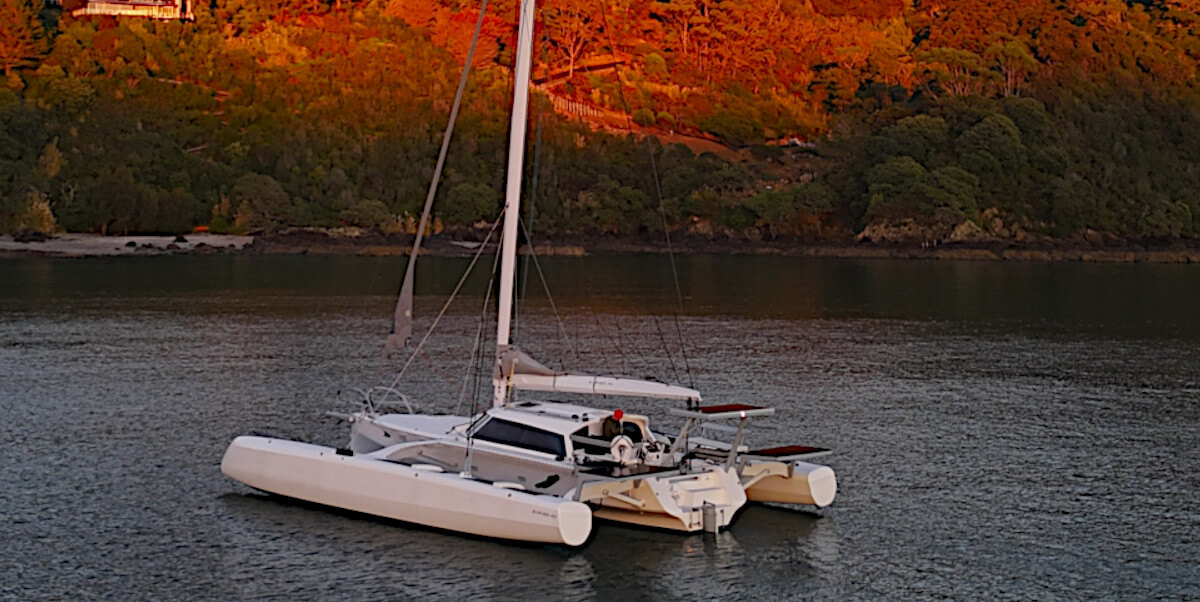
Solar power on the floats, targa bar and port & stbd davits. Rapido 40 #07, New Zealand.
The thinking is consistent from the beginning:
Use less energy to move the boat. Generate the energy you need efficiently. Build the boat to last.
That, for Rapido, is what sustainable cruising looks like.
9. “…And Did We Mention Fun?”
We’ve covered the serious stuff – naval architecture, safety margins, hydro-regeneration, and performance. Those details matter deeply to a serious sailor, and they are the foundation of everything we build.
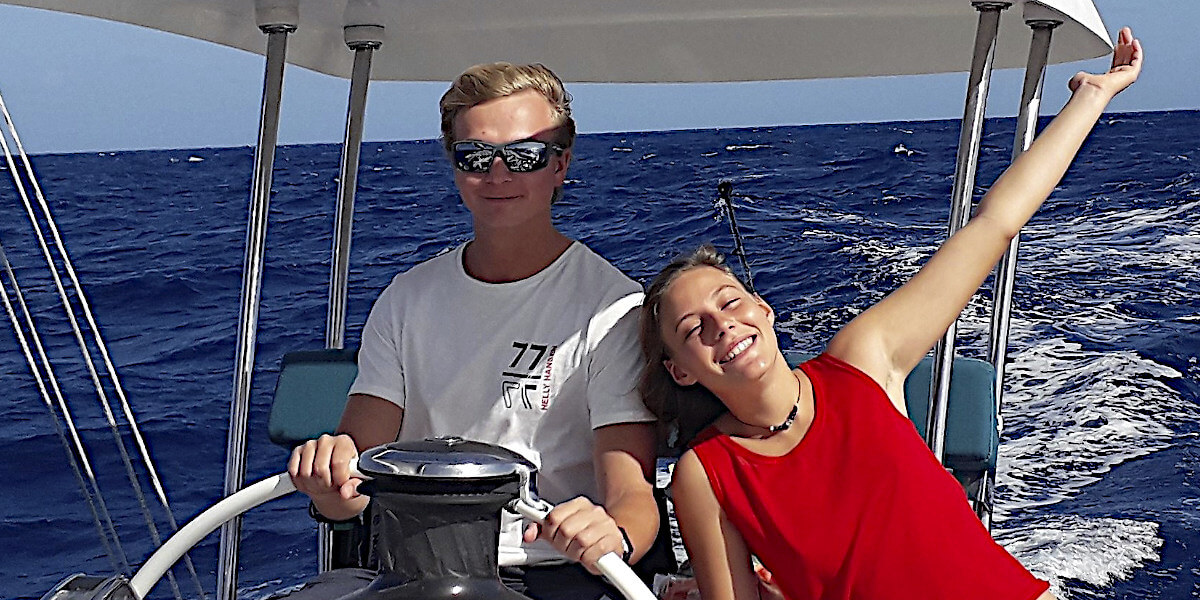
But separate from all those important calculations and engineering discussions is one element the specification sheets omit – but our owners don’t…
Sailing a Rapido, is it actually fun?
“She’s so much fun to sail. We hate to be sitting at a mooring. This is the most well-balanced boat I’ve ever sailed… I just love and trust this boat so much. It is an honour to own it."
Aboard Romanza, there were variations of the theme.
“She is fast and everyone gets this. It’s easy—and did I mention fun? The miles tick by effortlessly. No ‘roughing it’ was necessary, and for a girl like me on her first blue water trip, it’s everything I could ever have wanted."
Cruising World Magazine’s Boat of the Year judges sailed the Rapido 40 and were also caught up in the excitement:
“And Boy, was the Rapido 40 fun to sail! We skipped along at close to 8 knots. For a shorthanded crew, sailhandling is pretty simple."
For Rapido owners, that fun referred to above might simply be the feeling of the boat accelerating on a sunny afternoon.
But sometimes, what the boat makes possible goes far beyond the distance between two points on a chart. For example, consider the experience of Aldo Fumagalli and his crew on Picomole, the Rapido 53XS, when they visited Antarctica:
“As we entered Boyd Strait the wind had dropped, the seas were calm, and the experience… breathtaking. The first icebergs, the first whales, a warm sun and blinding white all around on high, jagged mountains. The Antarctica of postcards and videos is beautiful, but the reality surpasses all imagination. It was a struggle to get this far, for us and for Picomole, but it was worth it."
That experience came from everything working together – the speed to make the weather window usable, the efficiency to cover the distance, and the seaworthiness in tandem with the seamanship to make the passage possible.
After a day’s sailing, irrespective of the conditions, the sunset drink isn’t the destination.
It’s the quiet moment you sit back, look back across the water, and reflect: “We actually sailed here.”
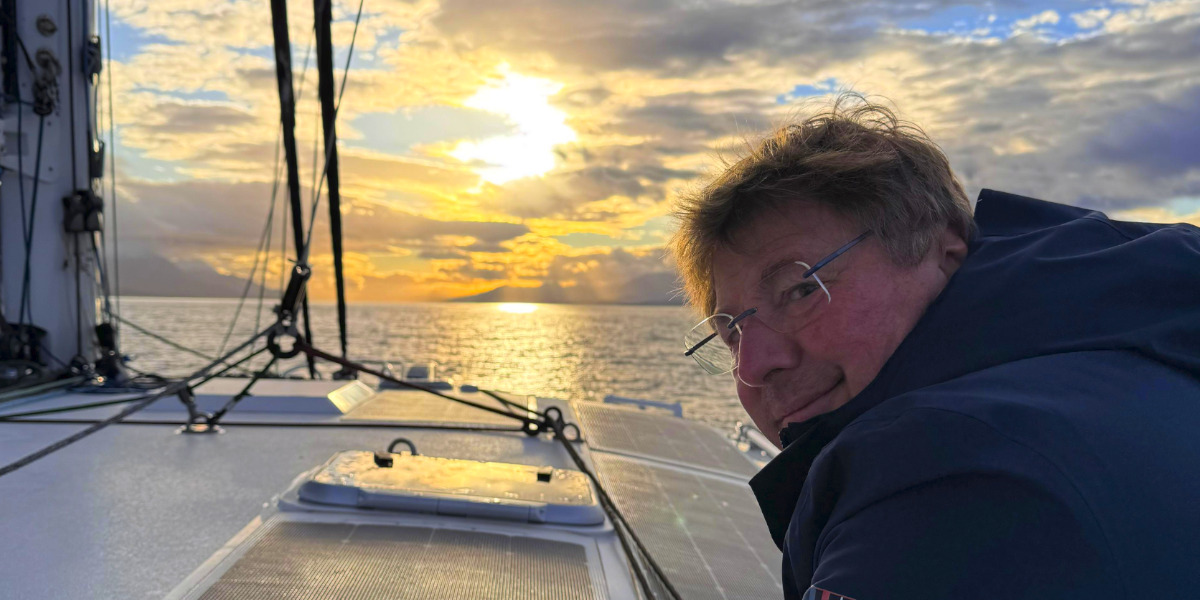
And did we mention fun?
Video above: Picomole, a Rapido 53XS is believed to be the first cruising trimaran to have ever sailed to Antarctica.
10. Next Steps: A Deliberate Journey
Selecting an ocean-going yacht is a serious, long-term decision – one that often takes years of evaluation. Rapido trimarans are bespoke, highly engineered platforms built to order for sailors who know exactly what they want; they are not mass-produced vessels sitting on a shelf waiting to be wheeled out the door.
When you are ready to evaluate how a Rapido aligns with your offshore cruising ambitions, we offer direct, straightforward resources to help you make an informed choice:
- Factory Tours: Walk through our Triac Composites facility in Vietnam to inspect our advanced carbon composite engineering firsthand.
- Offshore Demo Sails: Step aboard for an unscripted sea trial under genuine ocean conditions.
- Technical Consultations: Work through key choices such as fixed versus folding beams, layout specs, and custom equipment configurations – directly with our team.
Whenever you’re ready to start the conversation, submit your inquiry below or contact Phil Johns directly at [email protected].
Related Posts
- Rapido 60 #01 Owner Review: Why I Chose a Rapido Over a Monohull, by Steve Bourne
- Romanza R60 #02, triumphs in 2020 Yates Cup, New Zealand
- Ineffable’s Steve Bourne, R60 #01, “I’m a nutter for sailing”, reports Daily Herald
- A girl’s first blue water crossing: The Tasman Sea on Romanza, R60 #02
- Rapido 60 #02 Owner Review: What Would We Change After Crossing the Tasman Sea?
- Sailing Ineffable, R60 #02, across the Atlantic Ocean to the Caribbean, Part I, Part II and Part III