The Cannes Yachting Festival’s Innovation Route has quickly established itself as an essential showcase for the future of recreational boating. It highlights advances in sustainable products, innovative vessels, navigation technology, and broader environmental initiatives.
This year, comments from two jury members in particular caught our attention:
-
Journalist Geoffroy Langlade noted the growing focus on technologies that “reduce the [boating] industry’s carbon footprint.”
-
Rachel Goult, Managing Director of Yacht Carbon Offset, emphasized advancements that combine climate responsibility with what she called “the preservation of an exceptional boating experience.”
For a pleasure boat like a Rapido, sustainability shouldn’t come at the cost of enjoyment. In fact, done correctly, the two actively reinforce each other.
At Rapido, our contribution to that balance starts with something far less glamorous than AI, novel battery chemistries, or hybrid propulsion… It doesn’t showcase well on a stand at a boat show because it’s not new. It relies on a deceptively simple concept that requires relentless discipline to execute: weight control.
Start with the platform
Get the platform right, and you unlock more of its potential.
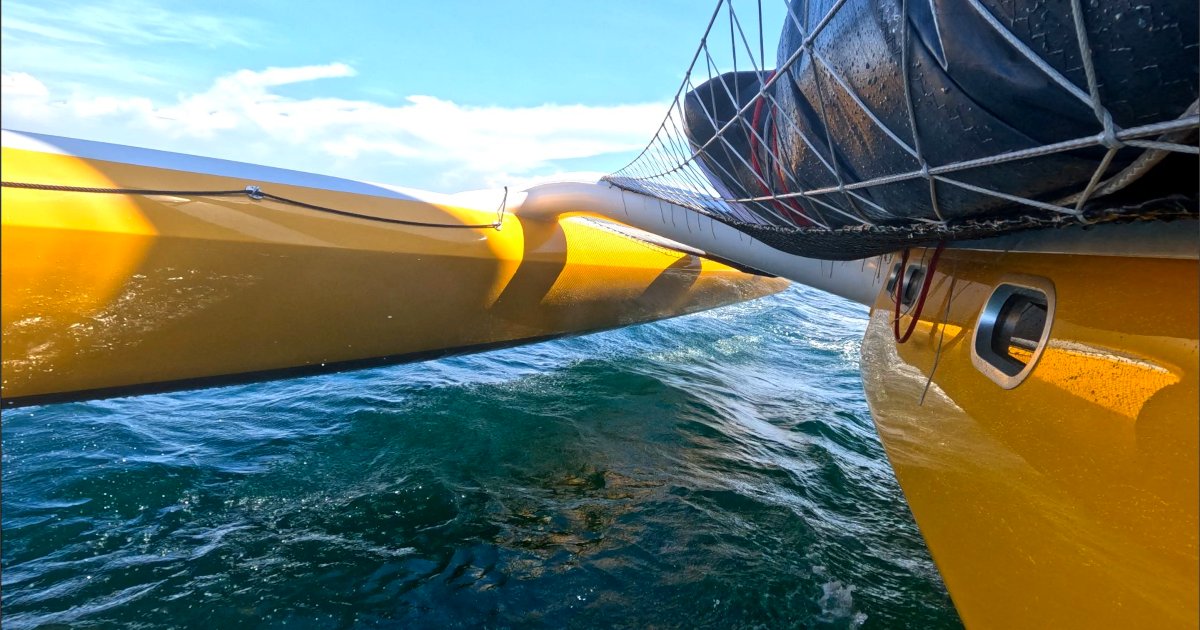
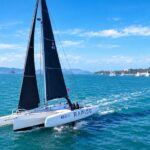
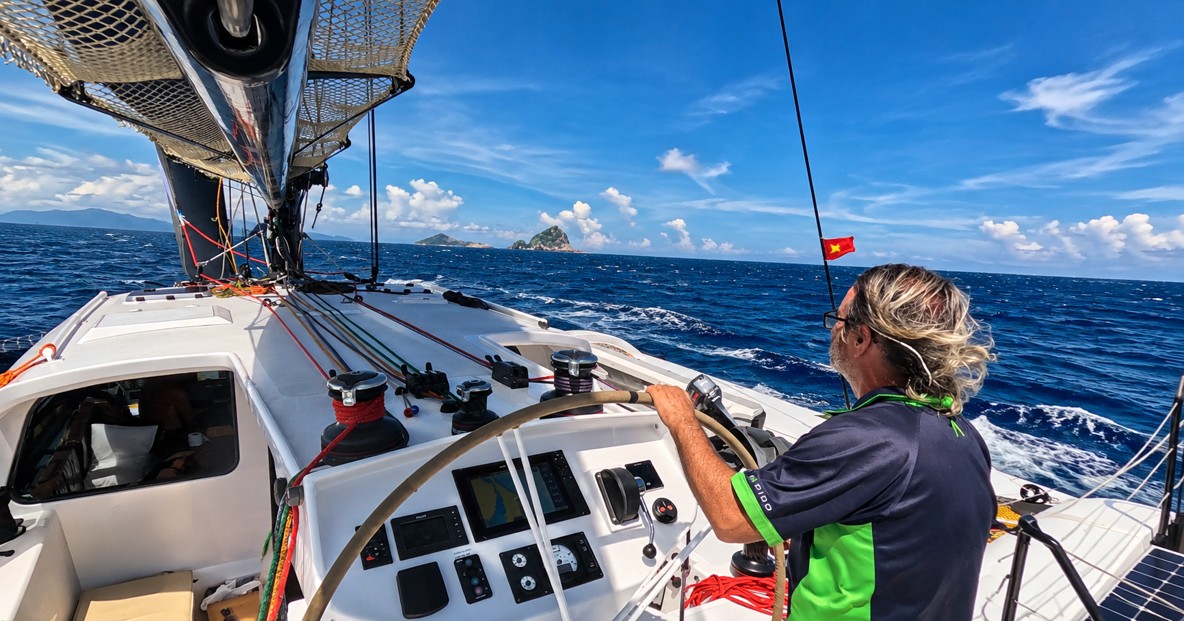
A boat that is lighter – without sacrificing structural strength, as reflected in CE-A (Ocean) certifications for each of the Rapido models – and shaped for low drag requires less energy to move through the water. In doing so, it releases performance that heavier hulls leave behind. The Rapido 60, for example, carries a light displacement of 10,000kg which is light for a boat of its size and load capacity.
For a sailing vessel, that means it can make fuller use of the primary propulsion source already on board: the wind – the sailing vessel’s fuel. It comes in varying amounts, sometimes at awkward times, but that’s part of what sailors are actually good at: getting the most from the conditions they’re given.
A light trimaran responds instantly to a fresh puff and carries speed through light patches that leave heavier boats searching for wind. That isn’t just an efficiency calculation; that is the essence of sailing.
Offshore, this efficiency becomes deeply practical. A vessel that maintains high average speeds makes better use of favorable weather windows, giving the crew more options when planning a passage.
Efficiency compounds
The compounding benefits carry directly into mechanical propulsion: if the vessel weighs less and creates less drag, significantly less power is required to move the boat. Smaller power demands mean smaller, lighter motors and supporting systems which, in turn, reduces the amount of weight to be added to the hull.
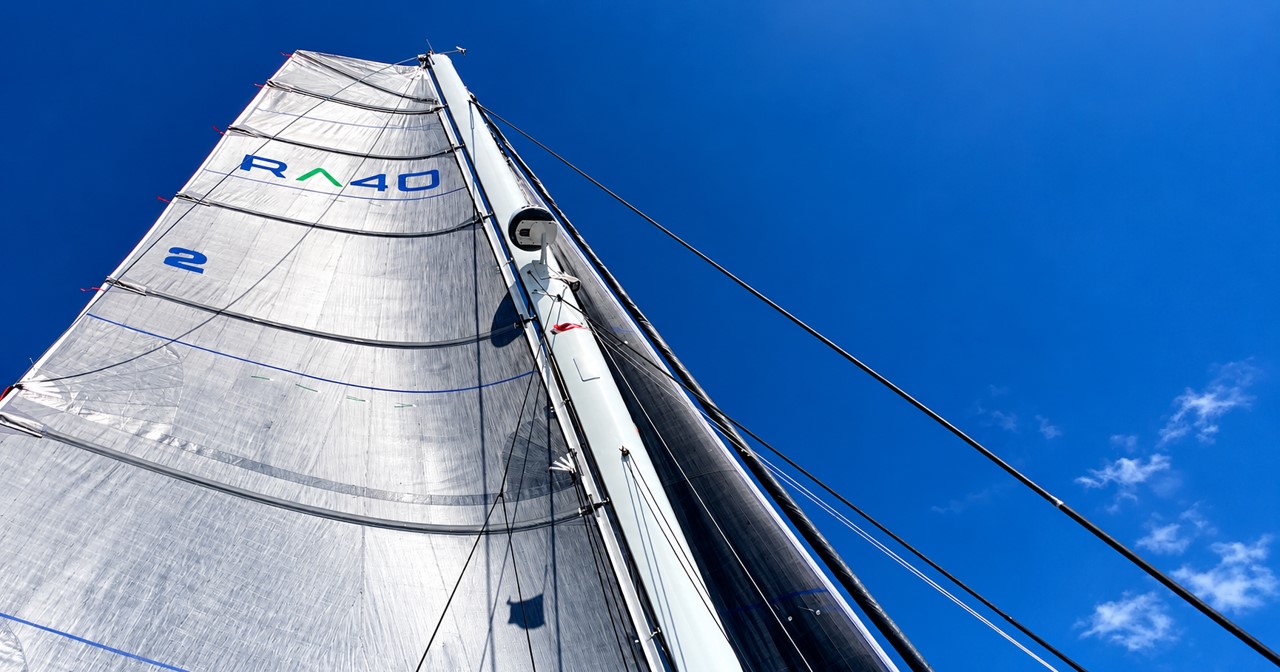
Weight control on a Rapido isn’t about a single hero component. It is a discipline applied end-to-end, foot by foot, from bow to stern (right down to details like carbon fiber drawers).
Then add the technology
Rapido embraces the same advanced technologies being adopted across the industry: solar generation, modern battery storage, electric propulsion and regeneration. The difference lies in our sequence of priorities: platform first, technology second.
-
Solar handles domestic power demands.
-
Batteries store and manage that energy efficiently.
-
Regeneration returns power to the system while under sail – and because regeneration output scales sharply with speed, an efficient hull that sails faster generates disproportionately more of it.
-
Electric propulsion provides clean, quiet auxiliary power when required.
Rapido’s goal isn’t to ask owners to live with less. Rather, it is to reduce the sheer amount of energy required to move the boat. From that efficient baseline, we power life aboard as intelligently as possible.
Throughout this process, we remain acutely aware that every technology – no matter how impressive – adds weight that will need to be pushed through the water. So there is a performance trade-off to be actively managed. That is why we are selective about how much technology we add, rather than simply whether we use it.
Rapido 40 Spike in full flight during the BVI Spring Regatta. Video: Tidal Pulse Media / BVI Spring Regatta.
Climate responsibility and the pleasure of sailing
The Cannes jury’s emphasis on preserving the boating experience resonates deeply with us. Reducing weight isn’t merely an environmental objective for Rapido; it underpins what makes the boat responsive, effortless in light air, and genuinely thrilling to sail – whether that is coastal, across oceans or through weather windows to remote locations like Antarctica.
Every kilogram removed is a kilogram less for the wind to push. What’s left over is free, carbon-free fuel – powering a more exhilarating sail on a Rapido.